My basil plant went from “cute little herb” to “aggressive green monster taking over my kitchen windowsill” in about two weeks.
I had three options. Let it flower and go to waste. Make pesto for the fortieth time. Or turn it into something I’d actually reach for every single day.
I went with option three. And now basil salt is the thing I’m sprinkling on eggs, popcorn, tomatoes, pasta, pretty much anything that touches my kitchen counter. 🌿
If you’ve got basil piling up right now (or you just want a seasoning that makes you look like you know what you’re doing), this one’s for you.
Here’s the part that got me though. I always assumed drying herbs meant losing flavor. Turns out it’s the opposite here.
The salt actually pulls moisture out of the basil while locking in the oils that carry all the flavor. So instead of a watered-down version of basil, you get something more concentrated. Almost punchier than the fresh leaf on its own.
Why Basil Salt Is Worth Making
Basil salt sounds fancy. It’s not.
It’s just two ingredients, blended together, then dried out so the flavor sticks around for months instead of days.
Fresh basil wilts fast. Give it a week in your fridge and it’s sad, black, and headed for the trash. Turn it into basil salt, though, and you’ve basically frozen that peak-summer flavor in time.
I used to feel a weird pang of guilt every time I tossed wilted herbs. This fixed that completely.
A few reasons this earns a spot in your pantry:
- It uses up basil before it goes bad (no more guilt-tossing wilted leaves)
- It takes about 10 minutes of hands-on work
- One batch lasts for months
- It makes everything from popcorn to roast chicken taste like you tried harder than you did
What You’ll Need
Ingredients:
| Ingredient | Amount |
|---|---|
| Fresh basil leaves, packed | 2 cups |
| Coarse kosher salt | 1/2 cup |
| Sea salt flakes (optional, for texture) | 2 tbsp |
That’s genuinely it. No fillers, no preservatives, no mystery ingredients.
Tools You’ll Need:
- Food processor or blender
- Baking sheet
- Parchment paper
- Fine mesh strainer or sifter (optional, but helpful)
- Airtight glass jar for storage
How to Make Basil Salt
Step 1: Wash and dry your basil
Rinse the leaves and pat them completely dry. This part matters more than you’d think.
Any leftover water moisture means your salt clumps and takes forever to dry out. A salad spinner speeds this up if you have one.
Step 2: Pulse the basil and salt together
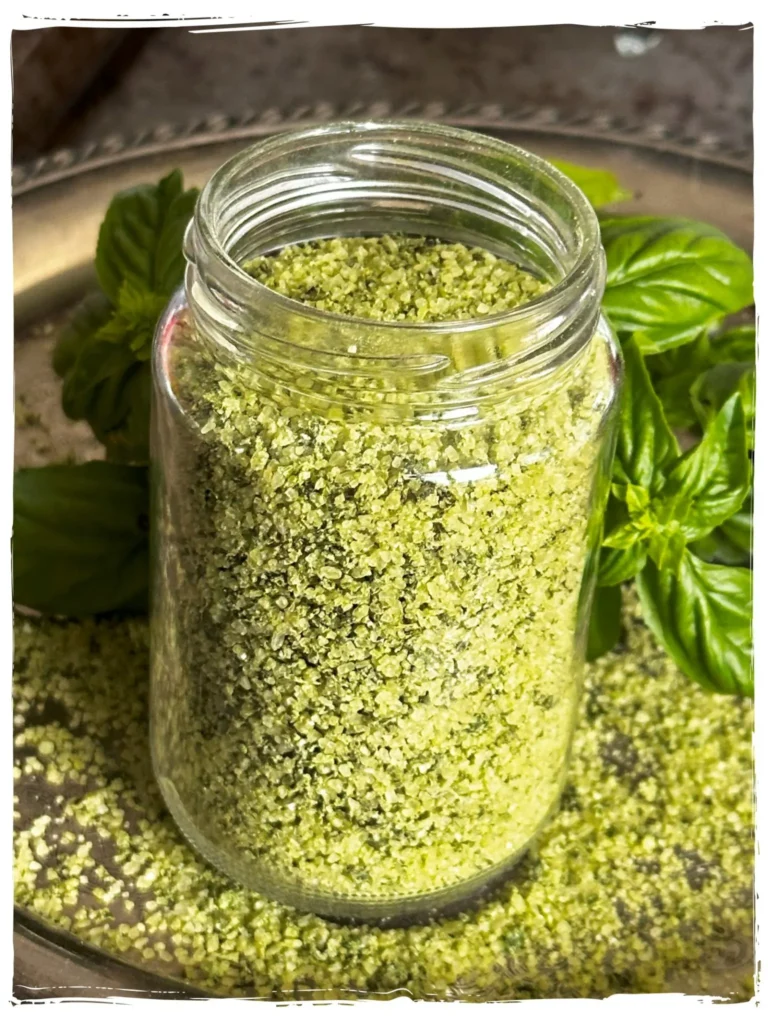
Add your basil leaves and salt to the food processor. Pulse until you get a coarse, bright green, slightly wet-looking mixture.
Don’t overdo it. You’re not making a paste, you’re just breaking the leaves down and getting that salt fully coated in basil oils.
Step 3: Spread it out thin
Line a baking sheet with parchment paper and spread the basil salt mixture out in a thin, even layer.
Thin is the keyword here. Clumps take twice as long to dry and can go moldy if they’re not fully dehydrated.
Step 4: Dry it out
You’ve got two easy options:
Oven method: Bake at 170°F (or your oven’s lowest setting) for 1 to 2 hours, checking every 30 minutes. Prop the door open slightly if your oven runs hot.
Air-dry method: Leave it out at room temperature for 2 to 3 days, stirring once a day. Slower, but zero energy used.
You’ll know it’s done when the mixture is completely dry and crumbly, not damp anywhere. Pick up a pinch and rub it between your fingers. If it feels even slightly cool or damp, it needs more time.
This is the step people rush, and it’s the one step you really shouldn’t rush.
Step 5: Break it up and store
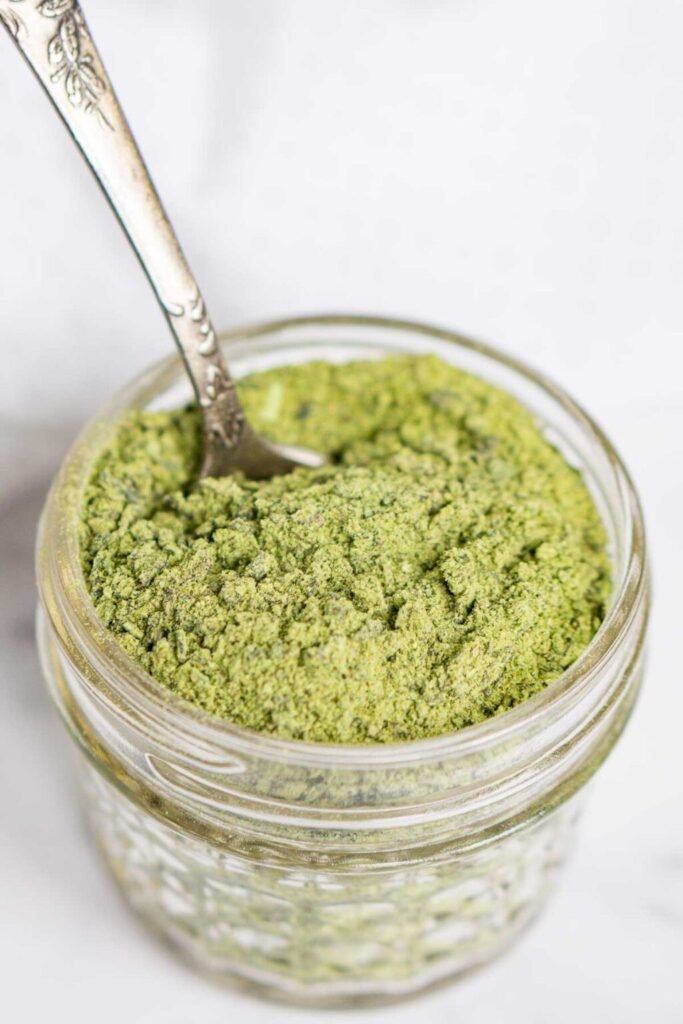
Once cooled, use your fingers or a fork to break up any clumps. Sift it through a fine mesh strainer if you want a finer, more uniform texture.
Transfer to an airtight jar. Done. 🎉
Pro Tips
Here’s what I wish someone had told me the first time I made this:
- Use the freshest basil you can find. Wilted or yellowing leaves make dull, less flavorful salt. This is not the place for basil that’s already halfway to compost.
- Don’t skip the drying step, even if you’re impatient. Undried basil salt molds fast. I learned this one the hard way.
- Coarse salt dries better than fine salt. It holds up to the moisture from the basil without turning into a solid brick.
- Taste as you go once it’s dry. Basil varies in intensity depending on the plant, so you might want to bump up the basil-to-salt ratio next time.
- Label your jar with the date. You’ll forget when you made it, I promise you will.
Substitutions and Variations
This recipe is basically a formula, not a fixed rule. Play with it:
- Herb swap: Try rosemary, thyme, sage, or a mix of Italian herbs instead of basil
- Citrus basil salt: Add lemon or lime zest before drying for a brighter, sharper flavor
- Garlic basil salt: Toss in 2 to 3 garlic cloves with the basil before pulsing
- Spicy version: Add a small dried chili or a pinch of red pepper flakes
- Purple basil: Swaps the color to a deep purple-green, same flavor payoff
Make Ahead Tips
This is genuinely a make-ahead recipe by design. There’s no “fresh is better” clock ticking on this one.
Make a big batch during peak basil season (usually mid to late summer) and you’ll have seasoning through winter. Some people make double batches specifically to give as gifts around the holidays, and honestly, it’s a good one. Little jar, ribbon, done.
Nutrition Breakdown
Basil salt is mostly, well, salt. Here’s the rough nutritional info per 1/4 teaspoon serving:
| Nutrient | Amount |
|---|---|
| Calories | 0-1 |
| Sodium | 480mg |
| Carbohydrates | 0g |
| Vitamin K | Trace amount |
Diet-friendly swaps:
- Lower sodium: Cut the salt down to 1/4 cup and increase basil to 3 cups
- Keto/low-carb: Already fits, since there’s virtually no carbs here
- Vegan/vegetarian: Naturally fits both, no adjustments needed
Pairing ideas:
- Sprinkle over sliced tomatoes and fresh mozzarella
- Finish a bowl of buttered popcorn with it
- Rub it on chicken or fish before roasting
- Rim a Bloody Mary glass with it
Efficiency tip: Make this while you’re already using your food processor for something else, like pesto or hummus. One less thing to wash later.
Leftovers and Storage
Basil salt keeps for up to 6 months stored properly. Here’s how to make it last:
- Store in an airtight glass jar, not plastic (plastic can trap moisture)
- Keep it in a cool, dark cabinet, away from the stove’s heat
- If you notice any clumping or a musty smell, it wasn’t dried all the way and should be tossed
FAQ
Can I use dried basil instead of fresh?
You can, but you’ll lose most of the point of this recipe. Fresh basil has oils that infuse into the salt as it dries. Dried basil just sits on top of the salt without really blending in.
Why did my basil salt turn brown instead of staying green?
This usually happens if the basil was bruised too much during processing or dried at too high a temperature. Keep your oven low and pulse gently instead of running the processor continuously.
Do I need special equipment to make this?
Nope. A food processor helps, but you can finely chop the basil by hand and mix it with salt if that’s what you’ve got.
Is this the same as basil-infused salt you buy at the store?
Pretty much, minus the markup. Store-bought versions run $8 to $12 for a small jar. This costs a fraction of that and takes 10 minutes of actual work.
Can I use table salt instead of kosher salt?
You can, but the texture ends up finer and it dries less evenly. Coarse salt is worth seeking out for this one.
Will basil salt lose its color over time?
A little bit, yes. It starts out a vibrant green and mellows to more of an olive tone after a couple months. It’s still perfectly good to use, just less photogenic.
Can I make this without an oven?
Yes. The air-dry method works just as well, it just takes a few days instead of a couple hours. If you live somewhere humid, the oven method is more reliable.
My basil salt smells musty. Is it still good?
No, toss it. A musty smell almost always means moisture got trapped somewhere during drying or storage, and that’s a sign mold could be starting.
Wrapping Up
That’s genuinely all it takes to turn an overgrown basil plant into a seasoning you’ll use for months.
If you make this, I’d love to know how it turned out. Drop a comment below and tell me what herb combo you tried, or ask away if anything’s unclear. I read every single one. 🌿