I used to think freezing peaches meant boiling a pot of water, dunking fruit in ice baths, and losing half my afternoon to a process that felt more like a science experiment than a kitchen task.
Turns out, none of that is actually necessary.
I learned this the hard way after a farmers market haul went south. I had 12 pounds of peaches, a two day window before they turned to mush, and zero patience for blanching. So I found a shortcut, tested it against the “proper” method, and honestly could not tell the difference once they thawed.
Side Note: If you’ve got a peach tree that’s currently dumping more fruit than your family can eat, this method is about to save your life (and your counter space).
Here’s the version that actually works, without the extra steps nobody has time for.
And once you’ve got a freezer full of peach slices, you’re basically set for smoothies, cobblers, and pancake toppings clear through winter. There’s a real satisfaction in pulling out summer fruit in the middle of a cold January morning.
Best Peaches for Freezing
Not every peach is built for the freezer. Here’s what actually holds up.
- Freestone peaches are the easiest choice. The pit separates cleanly, which saves you a ton of time when slicing.
- Clingstone peaches work too, but the pit sticks to the flesh and you’ll fight it a little more.
- Slightly firm, fully ripe fruit freezes best. Peaches that are already soft and juicy tend to turn mushy after thawing.
- Local, in-season peaches almost always freeze better than the ones shipped from far away, since they haven’t spent days sitting in transit before you even get to slice them.
If you’re buying a whole box at once, give each peach a gentle squeeze near the stem. A little give is good. If your thumb sinks in, that one’s better suited for jam than the freezer.
What You’ll Need
| Ingredient | Amount | Notes |
|---|---|---|
| Ripe peaches | 4 pounds | Freestone peaches are easiest to slice |
| Lemon juice | 1/4 cup | Keeps the flesh from browning |
| Water | 4 cups | For the lemon water soak |
| Granulated sugar (optional) | 1/2 cup | Only if you want a syrup or sugar pack |
That’s genuinely it. Four ingredients, and one of them is water.
Tools You’ll Need
- Sharp paring knife
- Cutting board
- Large mixing bowl
- Baking sheet
- Parchment paper
- Freezer bags or airtight containers
- Slotted spoon
Nothing fancy. If you’ve got a knife and a bowl, you’re already halfway there.
Pro Tips From Someone Who’s Done This a Dozen Times
1. Skip blanching entirely. Peach skins slide right off with a quick lemon water soak. Blanching works too, but it’s an extra pot and extra dishes for zero extra benefit.
2. Use fruit that’s ripe but still a little firm. Overripe peaches turn to mush the second they thaw. You want them fragrant with just a slight give.
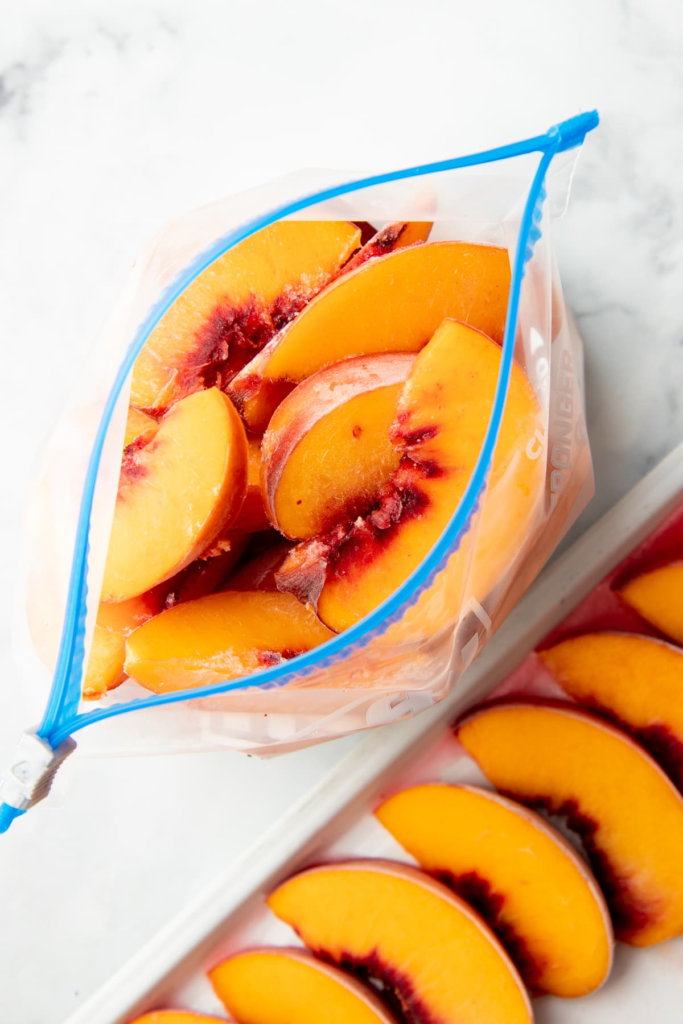
3. Freeze them flat first. Lay your slices on a baking sheet in a single layer before bagging them up. Skip this step and you’ll end up chiseling apart a peach brick in six months.
4. Don’t skimp on the lemon juice. Peaches brown fast once they’re cut. A proper lemon water soak is the difference between vibrant orange slices and sad gray ones.
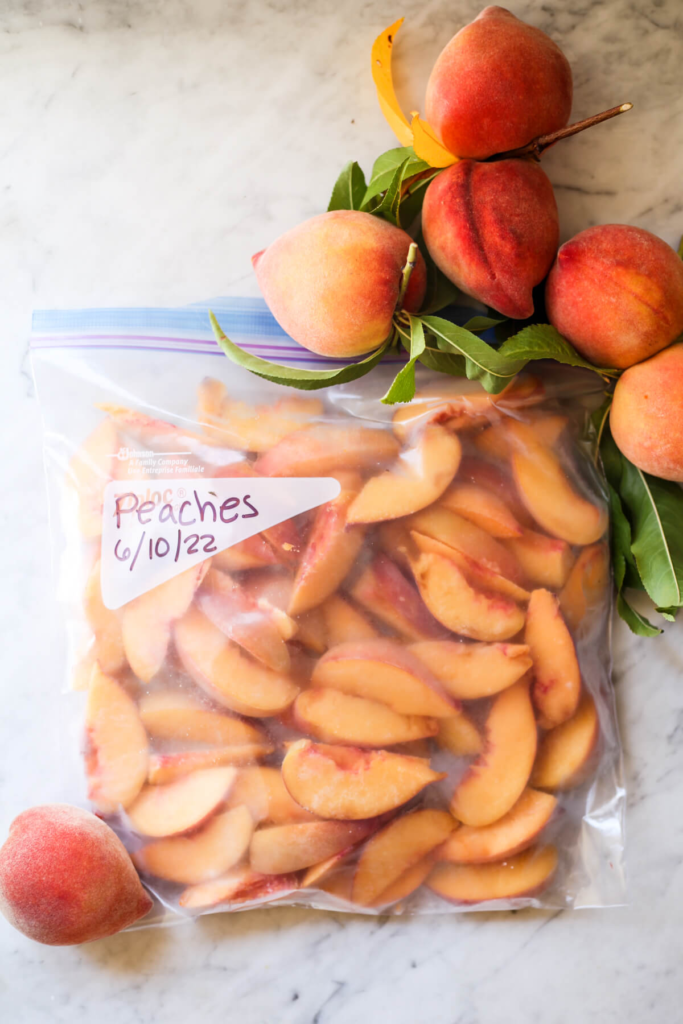
5. Label everything with the date. I promise you will not remember if that bag is from this summer or two summers ago. 🍑
How to Freeze Peaches Without Blanching
- Wash your peaches under cool water and pat them dry.
- Mix your lemon water. Combine the water and lemon juice in a large bowl. This is your browning insurance policy.
- Slice the peaches. Cut each peach in half, remove the pit, then slice into wedges (about 8 per peach works well). Skip peeling if you don’t mind the skin. It softens completely once frozen and cooked.
- Soak the slices. Drop the peach slices into the lemon water as you go. Let them sit for about 5 minutes total.
- Drain well. Use a slotted spoon to lift the slices out and let them drain on a clean towel for a minute.
- Arrange on a baking sheet. Lay the slices flat, not touching, on a parchment lined baking sheet.
- Flash freeze. Pop the tray in the freezer for 2 to 3 hours, until the slices are firm.
- Transfer to bags. Move the frozen slices into freezer bags or airtight containers. Press out as much air as possible.
- Label and freeze. Write the date on the bag. They’ll keep well for up to 12 months.
That flash freeze step is the whole trick. It’s the reason your peaches come out as individual slices instead of one giant fused block.
Substitutions and Variations
- Syrup pack: Dissolve 1/2 cup sugar in 2 cups water, cool completely, and pour over the peach slices in your storage container before freezing. This is the method a lot of grandmothers swear by, and it does help keep texture.
- Dry sugar pack: Toss sliced peaches with sugar (about 3/4 cup per 4 pounds of fruit) and let them sit for 15 minutes before freezing. The sugar draws out juice and forms a natural syrup.
- No sugar at all: Just the lemon water soak works fine if you’re avoiding added sugar. The texture holds up nearly as well.
- Nectarines instead of peaches: Same exact method, no fuzzy skin to worry about.
- Frozen peach puree: Blend soaked, drained peaches before freezing in ice cube trays. Great for smoothies later.
Nutrition (Per 1 Cup Sliced, Unsweetened)
| Nutrient | Amount |
|---|---|
| Calories | 60 |
| Carbs | 15g |
| Fiber | 2g |
| Sugar | 13g |
| Vitamin C | 10% DV |
These are estimates based on standard peach nutrition data, so double check against your specific fruit if you’re tracking closely.
Meal Pairing Ideas
- Blend into smoothies with yogurt and honey
- Toss frozen into overnight oats
- Bake into a cobbler straight from frozen (no thawing needed)
- Simmer down into a quick compote for pancakes or waffles
- Add to sangria or infused water
Storage and How Long Frozen Peaches Last
Properly frozen peaches hold their quality for 10 to 12 months in the freezer. They’re technically safe to eat beyond that, but the texture and flavor start fading after a year.
Thawing: For baking, you can usually go straight from freezer to oven. For eating fresh or blending, let them thaw in the fridge for a few hours or on the counter for about 30 minutes.
A quick warning: Frozen peaches release a lot of liquid as they thaw. If you’re using them in a pie or cobbler, drain off some of that juice first or your filling will turn soupy.
FAQ
Do I really not need to blanch peaches before freezing?
Nope. Blanching is traditional, but it’s meant for stopping enzyme activity in vegetables more than fruit. A lemon water soak does the same anti-browning job for peaches without the extra pot of boiling water.
Can I freeze peaches with the skin on?
Yes. The skin softens completely once the peaches are frozen and later cooked or blended. If you’re planning to eat them thawed and raw, peeling first gives a better texture.
Why did my frozen peaches turn brown?
This almost always means they didn’t get enough lemon juice contact, or they sat out too long before freezing. Don’t rush the soak step.
Can I skip the flash freeze step and just bag them up right away?
You can, but you’ll end up with one solid clump instead of scoopable slices. The extra couple hours on a tray genuinely makes a difference.
How many peaches do I need for one freezer bag?
A standard gallon bag holds about 4 to 5 pounds of sliced peaches, which is roughly 8 to 10 medium peaches.
Can I freeze whole peaches instead of slicing them?
You can, but it’s not ideal. Whole peaches take up more space, thaw unevenly, and are harder to portion later. Slicing first also makes the lemon water soak far more effective.
Will freezing change the texture much?
A bit, yes. Frozen and thawed peaches will always be softer than fresh ones since the water inside expands and breaks down the cell walls. That’s totally fine for baking, smoothies, or sauces, but keep it in mind if you were hoping to eat them thawed and raw, straight out of the bag.
Common Mistakes to Avoid
- Skipping the lemon soak. This is the number one reason people end up with brown, unappetizing peaches.
- Overcrowding the baking sheet. If the slices touch during the flash freeze, they’ll stick together in clumps.
- Freezing overripe fruit. Soft, bruised peaches only get softer once frozen.
- Using flimsy bags. Thin bags let in air and lead to freezer burn within a couple months. Spend the extra dollar on thicker freezer bags.
- Forgetting to press out air. Air is the enemy here. Squeeze bags flat before sealing, or use a straw to suck out excess air if you don’t have a vacuum sealer.
Wrapping Up
Freezing peaches sounds like it should be complicated, and I think that’s exactly why so many people skip it and let good fruit go to waste instead.
It’s really just slicing, a quick soak, and a couple hours of patience.
Give this method a try next time your peaches are multiplying faster than you can eat them, and let me know in the comments how it turns out. I’d love to hear if you go the syrup route or keep it simple with just lemon water.