Can a vegetable actually change your mind about vegetables?
Bok choy did that for me.
I used to walk right past it at the grocery store. It looked like something that needed a whole recipe card and a special trip to an Asian grocery store to even attempt.
Turns out it needs a pan, some garlic, and about 10 minutes.
That’s it. That’s the whole barrier to entry.
Once I actually made it, I was kind of annoyed at myself for waiting so long. The stalks turn tender but still have a little crunch, the leaves go silky, and the garlic soaks into every bite. It tastes like something from a restaurant menu, but it’s genuinely one of the easiest things in my weekly rotation now.
Side Note: If you’ve only ever had bok choy in soup, you’re missing out. Sauteing it brings out a completely different side of this vegetable.
This is the recipe I make on repeat when I need a fast, healthy side that doesn’t taste like a compromise.
And here’s a fun fact that surprised me when I first learned it: bok choy isn’t actually a type of cabbage in the traditional sense we usually think of. It’s technically a member of the same plant species as napa cabbage and broccoli, but it grows without forming a tight head at all.
That’s part of why it cooks so differently. There’s no dense center to fight through, so it goes from raw to perfectly tender in minutes flat.
Let’s get into it.
Why This Recipe Works
Bok choy has two textures in one vegetable, and that’s the secret.
The white stalks are crisp and mild, almost like a cross between celery and cabbage. The green leaves cook down fast and turn tender, almost spinach-like.
Cooking them together, but adding the leaves a minute or two later, means neither part turns to mush. You get crunch and softness in the same bite.
Add garlic, a splash of soy sauce, and a hot pan, and you’ve basically got a stir-fry without needing a wok or any special equipment.
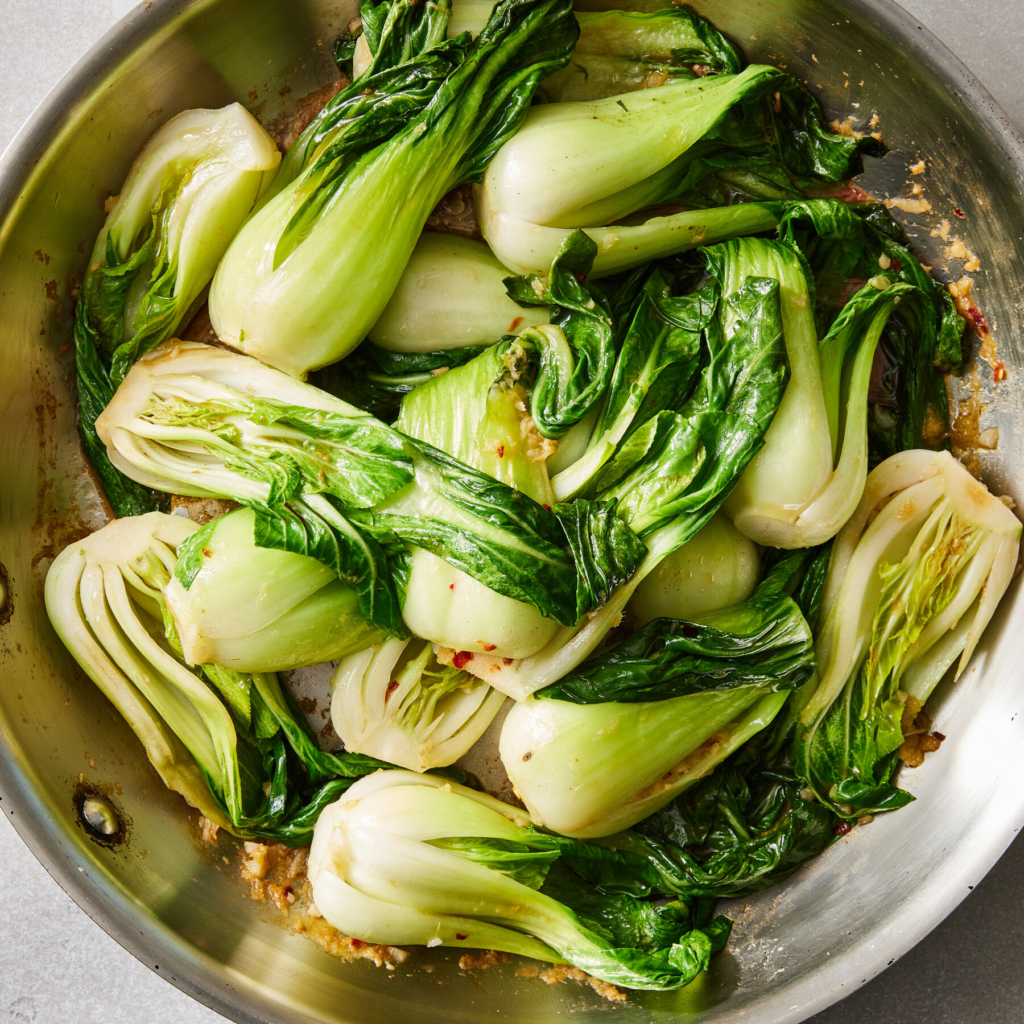
What You’ll Need
| Ingredient | Amount | Notes |
|---|---|---|
| Baby bok choy | 4-5 heads (about 1.5 lbs) | Halved or quartered lengthwise |
| Garlic | 3 cloves, minced | More if you’re a garlic person (no judgment) |
| Fresh ginger | 1 tsp, grated | Optional but really good |
| Neutral oil | 2 tbsp | Avocado or vegetable oil |
| Soy sauce | 1 tbsp | Low sodium if you’re watching salt |
| Sesame oil | 1 tsp | Adds a toasty flavor at the end |
| Red pepper flakes | 1/4 tsp | Optional, for a little heat |
| Water | 2 tbsp | Helps steam the stalks |
| Sesame seeds | For garnish | Optional |
Tools You’ll Need
- Large skillet or wok
- Sharp knife
- Cutting board
- Tongs
Pro Tips
- Wash bok choy thoroughly. Dirt loves to hide between the layers near the base. Rinse each half under running water and give it a shake.
- Cut stalks and leaves separately if you’re using full-size bok choy. The stalks need a head start since they take longer to soften.
- Don’t walk away from the pan. This cooks fast. Leaves can go from perfectly wilted to sad and soggy in under a minute.
- High heat is your friend. A hot pan gives you that slightly charred edge on the stalks without turning the leaves into mush.
- Add soy sauce at the end, not the beginning. It burns fast on high heat and turns bitter. Toss it in during the last 30 seconds.
Step-by-Step Instructions
- Prep the bok choy. Trim the very bottom of the root end off each head. Halve or quarter lengthwise depending on size. Rinse well and pat dry.
- Heat the oil. Add your neutral oil to a large skillet over medium-high heat. Let it heat for about a minute until it shimmers.
- Add garlic and ginger. Toss them in and stir constantly for about 15-20 seconds. You want fragrant, not brown.
- Add the stalks first. Place the bok choy cut-side down. Let the stalks sear for about 2 minutes without moving them.
- Add water and cover. Pour in the 2 tablespoons of water and cover the pan for 1-2 minutes. This steams the thicker parts so they cook through.
- Uncover and add the leaves. Flip everything and let the leafy tops wilt down for another 1-2 minutes.
- Finish with soy sauce and sesame oil. Drizzle both over the top and toss everything together for 30 seconds.
- Add red pepper flakes if using, then plate immediately.
- Garnish with sesame seeds and serve while it’s hot.
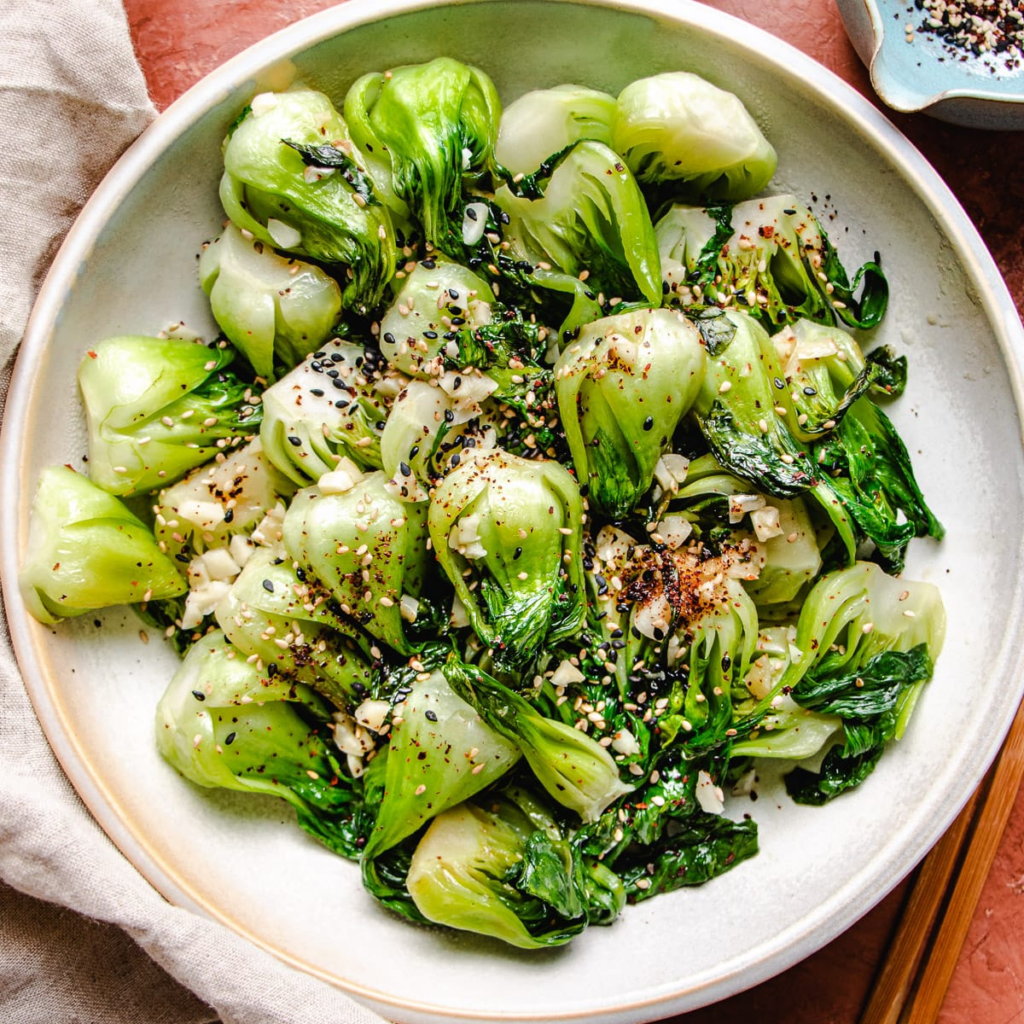
Substitutions and Variations
- No baby bok choy? Regular bok choy works, just chop the stalks smaller since they’re thicker and take longer to cook.
- Swap soy sauce for tamari if you need this gluten-free.
- Add protein like shrimp, tofu, or thin-sliced chicken to turn this side into a full meal.
- Oyster sauce instead of soy sauce gives it a slightly sweeter, deeper flavor if that’s more your style.
- No sesame oil? Skip it. The dish still works, it just won’t have that toasty finish.
- Bulk it up with sliced mushrooms or snap peas tossed in during the last two minutes.
Make-Ahead and Time-Saving Tips
Bok choy is really a same-day, same-pan kind of vegetable. It doesn’t hold up well pre-cooked in the fridge since it releases water and gets soggy.
What you can do ahead of time:
- Wash and cut the bok choy up to a day in advance. Store it dry in a container lined with a paper towel.
- Mince your garlic and grate your ginger ahead of time so dinner comes together in literally 5 minutes of active cooking.
- Mix your soy sauce, sesame oil, and red pepper flakes into one small bowl beforehand so it’s a single pour at the end.
Nutrition Estimate (Per Serving)
This recipe makes about 4 servings.
| Nutrient | Amount |
|---|---|
| Calories | 95 |
| Protein | 3g |
| Carbohydrates | 6g |
| Fiber | 2g |
| Fat | 7g |
| Sodium | 320mg |
These numbers are estimates based on standard ingredients. If you’re tracking closely, run the exact brands you’re using through a nutrition calculator.
Diet notes: This recipe is naturally vegan and gluten-free if you swap in tamari. It’s also low-carb friendly and works well on a Whole30 plan if you skip the soy sauce and use coconut aminos instead.
Storage and Reheating
Leftovers will keep in an airtight container in the fridge for up to 2 days.
Bok choy loses its texture fast, so day-two leftovers will be softer than fresh, but still tasty.
To reheat, use a hot skillet for about a minute rather than the microwave. The microwave tends to make it watery and limp.
I don’t recommend freezing this one. The leaves especially turn mushy once thawed.
Meal Pairing Suggestions
This dish plays really well as a side to:
- Grilled or pan-seared salmon
- Garlic fried rice
- Teriyaki chicken thighs
- A simple bowl of steamed jasmine rice and a fried egg on top
FAQ
Is bok choy the same as napa cabbage?
No. They’re both part of the cabbage family, but bok choy has distinct white stalks and dark green leaves, while napa cabbage is more tightly packed with pale, ruffled leaves throughout.
Can I eat the stalks raw?
Yes, they’re actually great raw in salads or slaws, similar to celery. This recipe just cooks them for a different texture.
Why is my bok choy watery after cooking?
This usually happens if the pan isn’t hot enough, or if too much water was added. High heat helps evaporate excess moisture as it cooks.
Can I steam bok choy instead of sauteing it?
Yes, though you’ll lose the slightly charred, caramelized edges you get from sauteing. Steaming is a good low-fat option if that’s what you’re going for.
How do I pick a good bok choy at the store?
Look for firm, bright white stalks and crisp, deep green leaves. Avoid any with yellowing edges or a mushy feel near the base.
Can I use frozen bok choy?
You can, but expect a much softer texture since freezing breaks down the cell walls. It works fine in soups, but it won’t give you that crisp-tender bite you get from fresh bok choy in this recipe.
Is bok choy actually good for you?
Yes, genuinely. It’s low in calories but packed with vitamin C, vitamin K, and calcium, which is pretty rare for a vegetable this light and mild in flavor.
Wrapping Up
Bok choy really is one of those vegetables that looks more complicated than it actually is.
Give it 10 minutes, a hot pan, and a little garlic, and you’ll probably end up making it as often as I do.
If you try this recipe, come back and let me know how it turned out in the comments. I’d love to hear if you added your own twist, or if you have questions before you get started.