Here’s a question. What if the best meal in your rotation costs less than a fast food combo and feeds your whole family twice?
That’s this stew.
I grew up watching my grandmother make a version of this on Sunday afternoons. No recipe card, no measuring cups, just a big pot and whatever vegetables were about to go bad in the fridge.
She called it “beef and cabbage stew.” My cousins called it “the good one.” Either way, it disappeared fast.
This is my updated take on that same stew. Ground beef, cabbage, carrots, and soft little pasta squares simmered in a rich tomato broth until everything melts together into something way better than the sum of its parts.
The whole thing costs around $10 to $12 to make, and it stretches across six generous bowls. That works out to less per serving than a single coffee shop drink.
Side Note: If you’ve ever wondered how people fed big families on tiny grocery budgets a few decades ago, this recipe is basically the answer.
I’ve made this one dozens of times now, tweaked it a little each time, and landed on a version that keeps every bit of that old-fashioned comfort while being simple enough for a weeknight.
Let’s get into it.
What You’ll Need
Nothing fancy here. This is a “raid your pantry” kind of recipe.
| Ingredient | Amount |
|---|---|
| Ground beef (80/20) | 1 1/2 lbs |
| Yellow onion, diced | 1 medium |
| Garlic, minced | 3 cloves |
| Green cabbage, chopped | 1/2 medium head |
| Carrots, sliced | 3 large |
| Potatoes, diced | 2 medium |
| Diced tomatoes (canned) | 28 oz can |
| Beef broth | 4 cups |
| Tomato paste | 2 tbsp |
| Pasta squares or egg noodles | 1 1/2 cups |
| Bay leaf | 1 |
| Paprika | 1 tsp |
| Salt and pepper | To taste |
| Olive oil | 1 tbsp |
| Fresh parsley, chopped | For topping |
Side Note: Pasta squares (sometimes labeled as “farfel” or homemade egg noodle scraps) give this stew its old-fashioned texture, but regular egg noodles or even broken lasagna sheets work just fine.
Tools You’ll Need
- Large Dutch oven or heavy soup pot
- Wooden spoon
- Cutting board and sharp knife
- Measuring cups and spoons
- Ladle
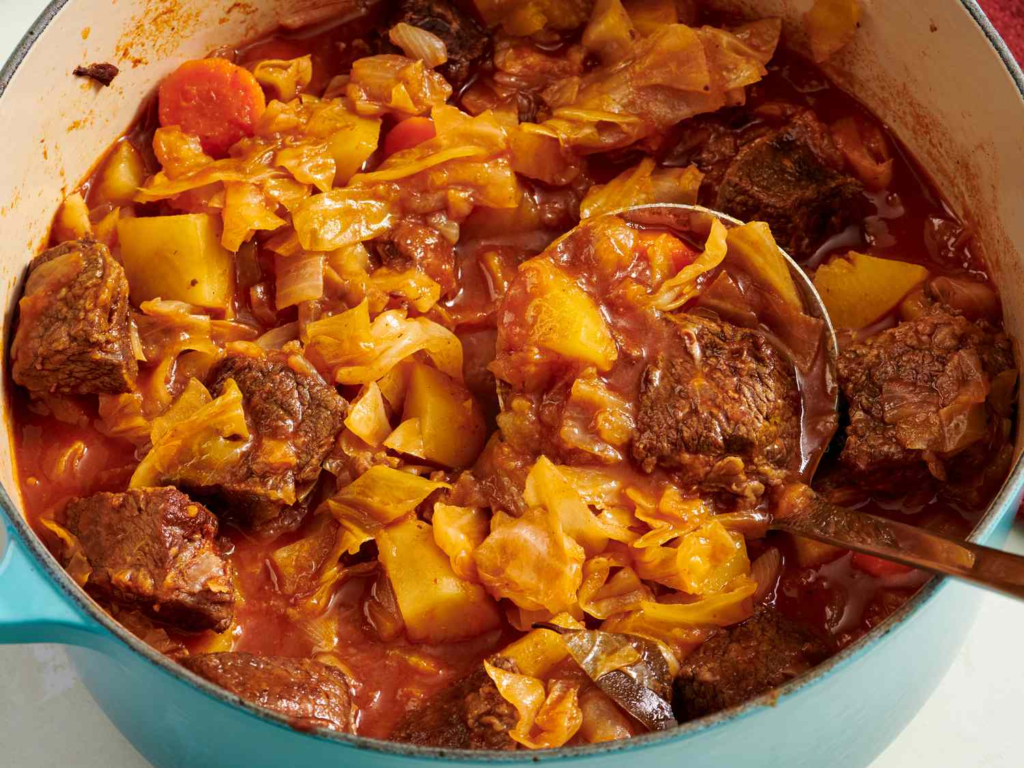
Pro Tips From My Kitchen
- Don’t skip browning the beef properly. Let it sit undisturbed for a minute before stirring. Those browned bits at the bottom of the pot are where most of the flavor comes from.
- Add the cabbage in two stages. Half early so it softens into the broth, half later so you still get some texture. This one small trick changes the entire stew.
- Undercook your pasta slightly before adding it. It keeps cooking in the hot broth, and nobody wants mushy noodles sitting in leftovers for three days.
- Season in layers, not all at once. Salt the beef while browning, salt the broth as it simmers, then taste again right before serving. Stews taste flat if you only season once.
- Let it rest for 10 minutes off the heat before serving. The flavors actually pull together more in that short window than you’d expect.
How to Make It
- Heat the olive oil in a large Dutch oven over medium-high heat.
- Add the ground beef and cook, breaking it apart with a wooden spoon, until browned. Drain excess fat if needed.
- Add the diced onion and garlic. Cook for 2 to 3 minutes, until the onion turns soft and fragrant.
- Stir in the tomato paste and paprika. Cook for 1 minute to deepen the flavor.
- Add the diced tomatoes, beef broth, carrots, potatoes, and bay leaf. Stir to combine.
- Add half of the chopped cabbage now. Save the rest for later.
- Bring the pot to a boil, then reduce to a simmer. Cover and cook for 20 minutes, stirring occasionally.
- Add the remaining cabbage and the pasta squares. Simmer uncovered for another 10 to 12 minutes, until the pasta is tender and the potatoes are fully cooked.
- Remove the bay leaf. Taste and adjust salt and pepper.
- Let the stew rest for 10 minutes before ladling into bowls.
- Top with fresh parsley and serve warm.
Substitutions and Variations
This stew is forgiving, which is exactly why it became a household staple in so many kitchens.
- Ground turkey or ground chicken instead of beef for a lighter version.
- Sweet potatoes instead of regular potatoes for a slightly different flavor profile.
- Small elbow macaroni or ditalini if you can’t find pasta squares.
- Green beans or peas thrown in during the last 10 minutes for extra vegetables.
- A splash of Worcestershire sauce for a deeper, savory backbone.
- Spicy version: add a pinch of red pepper flakes or a diced jalapeño with the onions.
Side Note: If you’re avoiding gluten, swap the pasta for a gluten-free noodle or just leave it out and add an extra potato instead.
Make Ahead Tips
- This stew actually tastes better the next day, once the flavors have had time to sit.
- You can fully cook it, cool it, and refrigerate for up to 2 days before reheating.
- If you’re making it ahead for a specific day, hold off on adding the pasta until you reheat. Add it fresh so it doesn’t turn soft and mushy while sitting in the fridge.
- Freeze the stew base (without pasta) in an airtight container for up to 3 months. Add fresh pasta when you reheat it.
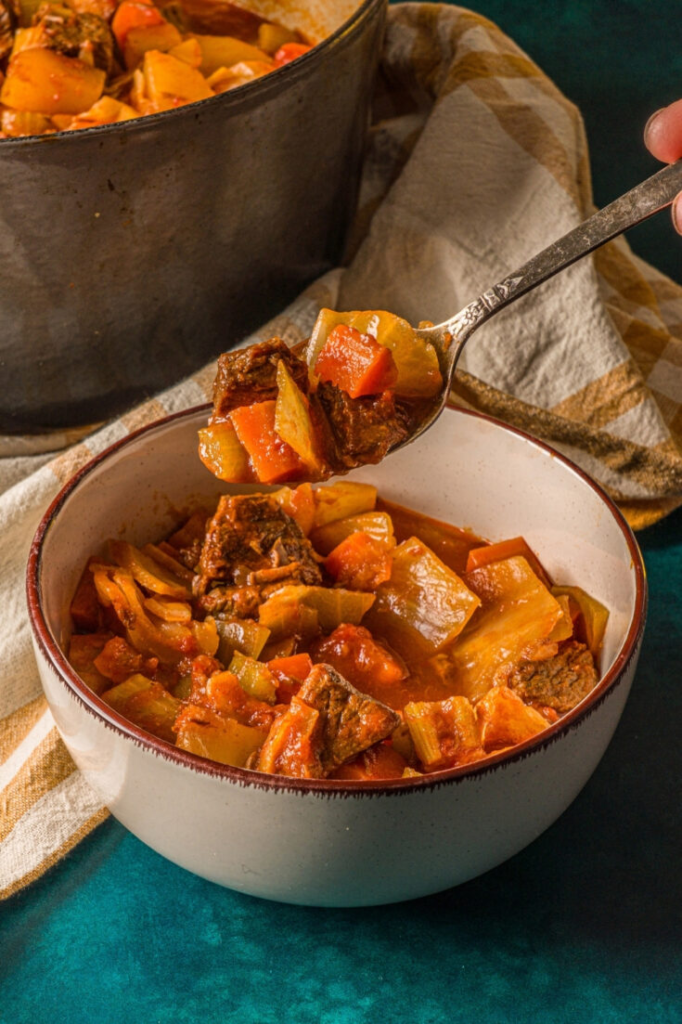
A Few More Helpful Details
Nutrition (Per Serving, Approximate)
| Nutrient | Amount |
|---|---|
| Calories | 320 |
| Protein | 22g |
| Carbohydrates | 28g |
| Fat | 14g |
| Fiber | 5g |
| Sodium | 610mg |
This is based on 6 servings and standard ingredient brands. Your exact numbers will shift depending on the beef fat content, broth brand, and how much pasta you use, so treat this as a general guide rather than an exact count.
Meal Pairing Ideas
- A thick slice of crusty bread or cornbread for soaking up the broth
- A simple side salad with vinaigrette to balance the richness
- A sprinkle of shredded parmesan right before serving
- A cold glass of iced tea or lemonade if you’re serving this in warmer months
This stew is filling enough to stand on its own, so keep the sides light. You’re not trying to compete with it, just round it out a little.
Time Efficiency Tip
Dice all your vegetables the night before and store them in the fridge in a sealed container. On the day you actually cook, this turns a 45 minute recipe into a 25 minute one.
Leftovers and Storage
- Store leftovers in an airtight container in the fridge for up to 4 days.
- Reheat on the stovetop over medium-low heat, stirring occasionally. Add a splash of broth or water if it’s thickened up too much.
- The stew freezes well for up to 3 months. Thaw overnight in the fridge before reheating.
- Avoid freezing it with the pasta already in it if you can help it. Cooked pasta gets soft and a little sad after freezing and thawing.
FAQ
Can I make this in a slow cooker?
Yes. Brown the beef and onions on the stovetop first, then transfer everything except the pasta to the slow cooker. Cook on low for 6 to 7 hours, then stir in the pasta during the last 20 to 30 minutes.
What’s the difference between this and regular vegetable beef soup?
This stew is thicker and heartier, thanks to the potatoes, cabbage, and pasta squares. Vegetable beef soup tends to be brothier and lighter.
Can I use a different cut of beef instead of ground beef?
Definitely. Stew meat or chuck roast cut into small cubes works great, though it will need a longer simmer time, closer to an hour, to get fully tender.
Why is my stew too thin?
Simmer it uncovered for an extra 10 minutes to let some liquid evaporate. You can also mash a few of the potato pieces against the side of the pot to naturally thicken the broth.
Is this recipe kid friendly?
Very much so. The flavor is mild and savory rather than spicy, and the small pasta pieces make it easy for younger kids to eat.
Can I double the recipe?
Yes, and it’s a great idea if you’re feeding a crowd or want extra for the freezer. Just make sure your pot is large enough, since this stew nearly doubles in volume once everything is simmering together. You may need to cook it in batches or use two pots.
Wrapping Up
This stew is proof that the simplest recipes are usually the ones that stick around for generations.
One pot, a handful of ingredients you probably already have, and a couple hours of mostly hands-off cooking. That’s it.
Give it a try this week and let me know how it turns out in the comments below. I’d love to hear if you added your own twist, or if it reminded you of a recipe from your own family.