My grandma kept a jar of this stuff in her fridge every single winter. It looked like something you’d find in a witch’s cabinet. Orange, cloudy, with chunks of ginger and garlic floating around like they were up to something.
I refused to try it for years.
Then I got hit with a cold that wouldn’t quit, she handed me a shot glass of the stuff, and I drank it out of pure desperation.
It was spicy. It was sour. It kind of punched me in the face.
And weirdly? I felt better within the hour.
Fire cider is one of those old folk remedies that’s been passed down for generations, and once you make a batch, you’ll get why it’s stuck around this long. It’s basically apple cider vinegar infused with ginger, garlic, citrus, and heat, then sweetened with honey once it’s done doing its thing.
It’s not a magic cure. But it’s packed with ingredients that have been used for centuries to support your immune system, and it tastes like something is actually working when you take it.
Let’s make a batch.
Why This Recipe Works
Fire cider is basically a flavor bomb disguised as medicine.
You’re taking raw, unfiltered apple cider vinegar (the kind with the “mother” still in it) and steeping it with a pile of pungent, spicy ingredients for weeks.
The vinegar pulls all the good stuff out of the ginger, garlic, and citrus. 🧄
By the time it’s ready, you’ve got a concentrated, spicy-sour tonic that you take in small shots, not by the glass (trust me on this one).
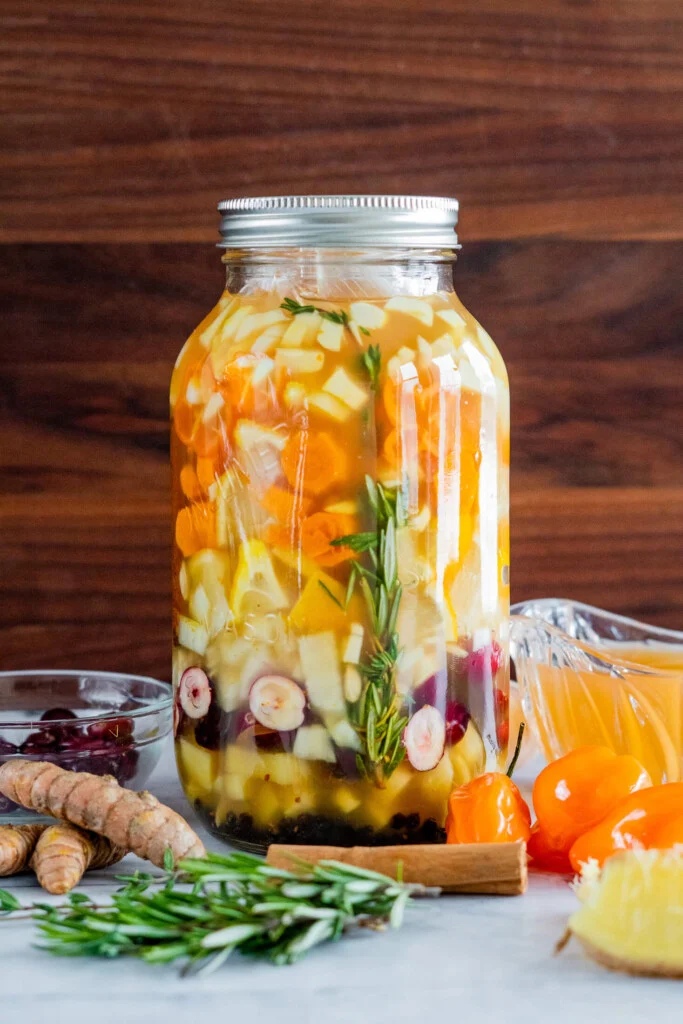
What You’ll Need
Here’s your ingredient lineup. Nothing fancy, just stuff you can grab at any grocery store.
| Ingredient | Amount |
|---|---|
| Raw, unfiltered apple cider vinegar (with the mother) | 4 cups |
| Fresh ginger, sliced into coins | 1/2 cup |
| Garlic cloves, smashed | 8-10 |
| Apple, cored and sliced | 1 medium |
| Lemon, sliced (peel on) | 1 whole |
| Cinnamon sticks | 2 |
| Fresh thyme sprigs | 3-4 |
| Black peppercorns | 1 tbsp |
| Jalapeño, sliced (seeds in for more heat) | 1 |
| Red pepper flakes (optional, for extra kick) | 1 tsp |
| Raw honey (added after straining) | 1/4 cup, or to taste |
Side Note: Don’t skip the “raw, unfiltered” vinegar. The regular clear stuff from the pasta aisle won’t give you the same benefits, and it won’t taste nearly as good either.
Tools You’ll Need
- A large glass mason jar (a 32 oz or 1-quart jar works great)
- A cutting board and sharp knife
- A fine mesh strainer or cheesecloth
- A funnel (makes straining way less messy)
- Smaller glass bottles or jars for storing the strained cider
How to Make Fire Cider
- Prep your ingredients. Slice the ginger into thin coins, smash the garlic cloves with the flat side of your knife, slice the apple and lemon, and slice your jalapeño.
- Layer everything into your jar. Add the ginger, garlic, apple, lemon, cinnamon sticks, thyme, peppercorns, jalapeño, and red pepper flakes (if using) into your mason jar.
- Pour in the vinegar. Fill the jar with apple cider vinegar until everything is fully submerged. This part matters. Anything poking above the liquid can grow mold.
- Weigh it down if needed. If your ingredients keep floating up, use a fermentation weight or a small clean rock to keep them under the surface.
- Cover and label it. Use a piece of parchment paper between the jar and the lid if you’re using a metal lid (vinegar corrodes metal over time). Label it with today’s date.
- Store it somewhere dark. A pantry or cabinet works perfectly. Let it sit for 3 to 4 weeks, shaking the jar every couple of days.
- Strain it. Once it’s done steeping, strain out all the solids using your mesh strainer or cheesecloth. Squeeze out as much liquid as you can from the ginger and garlic before tossing them.
- Sweeten it. Stir in your honey, tasting as you go. Start with less, you can always add more.
- Bottle and store. Pour the finished cider into smaller bottles. Keep it in the fridge, and it’ll last for months.
Pro Tips
Here’s everything I learned the hard way, so you don’t have to.
- Shake the jar daily. This keeps the ingredients from clumping together and helps everything infuse evenly.
- Use a jar bigger than you think you need. You’ll be adding a lot of solid ingredients, and you want room for the vinegar to fully cover everything.
- Don’t rush the steeping time. I tried straining mine early once at two weeks. It tasted watered down and weak compared to a full four-week batch.
- Wear gloves when handling the jalapeño. Or wash your hands immediately after. I learned this one the hard way after rubbing my eye. Don’t do that.
- Take it as a shot, not a drink. A tablespoon or two is plenty. This stuff is strong, and a full glass will absolutely wreck your throat.
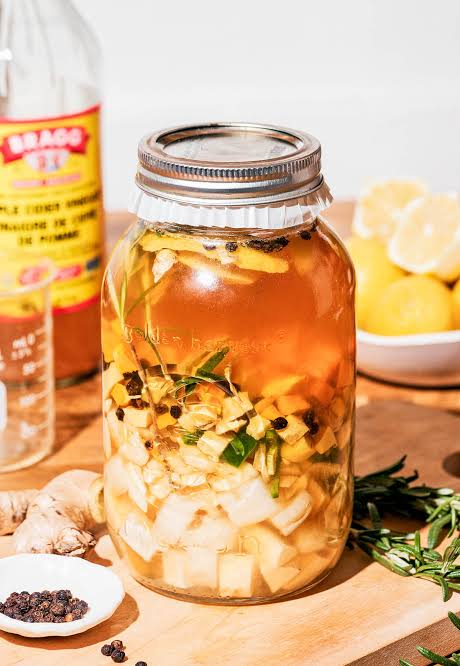
Substitutions and Variations
Fire cider is incredibly forgiving, so feel free to play around.
- No fresh horseradish on hand? Traditional fire cider recipes often include horseradish root. Feel free to add a few tablespoons if you want that extra sinus-clearing kick.
- Swap the jalapeño. Habanero or cayenne pepper both work if you want more heat. A milder pepper like poblano works if you want less.
- Add turmeric. A tablespoon of fresh grated turmeric (or a teaspoon of powder) adds an earthy, slightly bitter note along with a gorgeous golden color.
- Skip the honey for a vegan version. Maple syrup works as a 1:1 swap if you’re avoiding animal products.
- Try it with orange instead of lemon, or use both for a more well-rounded citrus flavor.
Make Ahead Tips
Fire cider basically has to be made ahead, since it needs 3 to 4 weeks to steep before it’s ready.
The good news is that once it’s strained and bottled, it keeps for months in the fridge. Make a big batch in the fall, and you’ll have your immune support covered through the entire winter.
Nutritional Breakdown (Per 1 Tbsp Serving)
| Nutrient | Amount |
|---|---|
| Calories | ~15 |
| Total Fat | 0g |
| Sodium | 0mg |
| Total Carbs | 4g |
| Sugars | 3g |
| Vitamin C | Small amount from citrus and vinegar |
Note: This is an estimate. Exact values will vary depending on your specific ingredients and brands, so treat this as a general guide rather than an exact number.
How to Use Fire Cider
- Take 1 to 2 tablespoons straight, first thing in the morning
- Mix it into warm water with extra honey for a soothing tea
- Whisk it into salad dressings for a spicy, tangy kick
- Add a splash to sparkling water for a homemade shrub-style drink
Leftovers and Storage
Once strained and bottled, fire cider stores in the fridge for 3 to 6 months. The vinegar base is naturally preserving, so you don’t need to worry about it going bad quickly.
Give the bottle a shake before each use since the honey can settle at the bottom over time.
FAQ
Does fire cider actually work?
There’s no scientific proof it cures colds, but the ingredients (garlic, ginger, citrus, and honey) all have well-documented health benefits on their own. Think of it as a nutrient-packed boost rather than a miracle cure.
Can I drink fire cider every day?
Yes, a tablespoon a day is a common daily dose. Just don’t overdo it since the acidity can bother your stomach or teeth if you drink too much, too often.
Why does my fire cider have a cloudy layer at the bottom?
That’s totally normal. It’s just sediment from the ingredients. Give the bottle a shake before using it.
Can I make this without alcohol or fermentation risk?
Yes. You’re not fermenting anything here since the vinegar is already acidic enough to prevent harmful bacteria growth. This is simply an infusion, so it’s safe as long as everything stays fully submerged in the vinegar.
How spicy is this really?
It has a noticeable kick from the jalapeño and black pepper, but it’s not unbearably hot. Adjust the amount of pepper up or down based on your spice tolerance.
Do I need to peel the ginger and garlic first?
Peeling the ginger is optional since the skin has no real flavor impact once it’s strained out. Garlic can go in with the peel on too, as long as you smash the cloves so the vinegar can actually get inside them.
Time-Saving Tip
Short on prep time? Toss the ginger, garlic, apple, and lemon into a food processor and pulse a few times instead of hand-slicing everything.
It won’t look as pretty in the jar, but it speeds up the infusion since the vinegar has more surface area to work with. Just strain a little extra carefully at the end since the pieces will be smaller.
Wrapping Up
Fire cider isn’t going to replace your multivitamin, but it’s a fun, punchy little ritual to add to your routine once the weather turns cold.
Give this a try, and let me know in the comments how strong you made yours (and whether you survived the first shot).
If you have any questions about the steeping process or want to tweak the recipe for your own spice tolerance, drop them below. I’m always happy to help troubleshoot a batch.