I almost gave three jars of home canned bananas to my neighbor before I found out they could have made her sick.
Not spoiled sick. Botulism sick.
Turns out, canning whole bananas in a water bath is one of those things that sounds totally fine and isn’t. Bananas are low acid, and low acid foods need a pressure canner (or an acid boost) to be safe. Skip that step and you’re basically rolling dice with a toxin that has no smell, no taste, and no warning sign.
So no, we’re not canning plain bananas today.
We’re doing something better. 🍌
I’m going to show you how to turn ripe bananas into a jammy, caramel-scented spread that’s safe to can in a regular water bath, tastes like banana bread in spoonable form, and actually has a reason to exist in your pantry (hello, toast topping you didn’t know you needed).
Grab your ripest bananas. The uglier, the better.
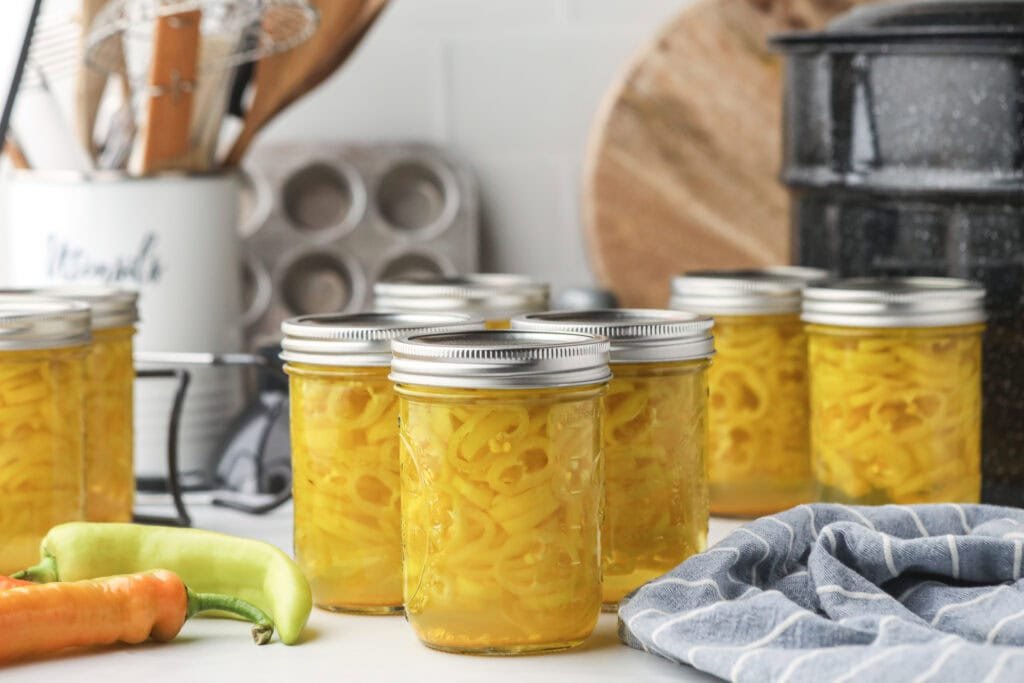
Why Whole Bananas Can’t Be Water Bath Canned
Quick science detour, then I promise we get to the fun part.
Home canning splits into two camps:
- High acid foods (jams, pickles, tomatoes with added acid) can go in a simple water bath.
- Low acid foods (meat, most vegetables, and yes, bananas) need a pressure canner to reach a high enough temperature to kill Clostridium botulinum spores.
Bananas have a pH around 4.5 to 5.2. That puts them right in the danger zone where water bath canning isn’t reliable.
Adding sugar, lemon juice, and cooking them down changes the game entirely. That’s what turns them into jam, and jam is one of the safest things you can can at home.
Same fruit. Completely different safety profile. Wild, right?
What You’ll Need
| Ingredient | Amount |
|---|---|
| Ripe bananas (the spottier, the better) | 6 large (about 3 cups mashed) |
| Lemon juice (bottled, not fresh) | 1/4 cup |
| Granulated sugar | 1 1/2 cups |
| Ground cinnamon | 1 tsp |
| Ground nutmeg | 1/4 tsp |
| Vanilla extract | 1 tsp |
| Pinch of salt | 1/4 tsp |
Quick note on the lemon juice: use bottled, not fresh. Bottled lemon juice has a consistent, tested acidity level. Fresh lemons can vary, and when you’re canning, consistency is the whole point.
Tools You’ll Need
- Large heavy bottomed pot (not aluminum, it reacts with the acid)
- Potato masher or immersion blender
- Water bath canner (or a large stockpot with a rack)
- 4-ounce or 8-ounce canning jars, lids, and bands
- Jar lifter
- Canning funnel
- Ladle
- Clean kitchen towels
- A candy or instant read thermometer
Pro Tips From Someone Who’s Ruined a Batch
1. Use bananas that are almost too far gone. The ones with more brown than yellow on the peel have way more natural sugar and flavor. Don’t toss them, can them.
2. Don’t rush the cooking stage. Banana jam thickens as it cooks down, not just as it cools. If it looks a little thin at the 15 minute mark, keep going. It should coat the back of a spoon before it’s ready.
3. Test for doneness with the cold plate trick. Pop a small plate in the freezer before you start. Drop a spoonful of jam on it, wait 30 seconds, then push it with your finger. If it wrinkles, you’re done.
4. Sterilize your jars even if your canner instructions say it’s optional. It takes ten extra minutes and it’s the cheapest insurance you’ll ever buy.
5. Leave real headspace. A quarter inch might look like a mistake, but it’s what lets the jar seal properly. Too full and you risk a failed seal.
Substitutions and Variations
Banana jam is forgiving. Here’s where you can play around:
- Brown sugar instead of white for a deeper, molasses-y flavor.
- A splash of dark rum stirred in at the end (skip the water bath processing time change, alcohol cooks off but adds character).
- Swap nutmeg for cardamom if you want something a little more unexpected.
- Add crushed pineapple for a tropical twist, just be sure to reduce the banana slightly to keep the ratios balanced.
- Low sugar version: use a pectin made for low sugar recipes and cut the sugar by half. The texture will be looser but still spreadable.
How to Make Canned Banana Jam
- Prep your jars first. Wash jars, lids, and bands in hot soapy water. Keep jars warm in a low oven (about 200°F) until you’re ready to fill them.
- Mash the bananas. Peel and mash your bananas until mostly smooth with a few small chunks left for texture.
- Combine everything in your pot. Add mashed bananas, lemon juice, sugar, cinnamon, nutmeg, and salt to your heavy bottomed pot.
- Cook low and slow. Bring to a gentle boil over medium heat, stirring often so it doesn’t stick or scorch.
- Reduce and simmer. Once bubbling, drop to medium low and simmer for 20 to 25 minutes, stirring regularly. It’ll darken slightly and thicken as it goes.
- Run the cold plate test. Check for doneness using the trick above. Once it wrinkles when pushed, stir in the vanilla and remove from heat.
- Fill your jars. Using the canning funnel and ladle, fill jars leaving 1/4 inch headspace.
- Remove air bubbles. Run a clean chopstick or bubble tool around the inside of the jar to release trapped air.
- Wipe the rims. Any jam residue on the rim can mess up the seal, so wipe with a clean damp cloth.
- Seal and process. Add lids and bands until fingertip tight, then process in a water bath canner for 10 minutes (adjust for altitude if you’re above 1,000 feet).
- Cool completely. Remove jars and let them sit undisturbed for 12 to 24 hours. You’ll hear satisfying little “pings” as they seal.
- Check the seals. The lid should not flex when pressed in the center. If it does, refrigerate that jar and use it within a few weeks instead of storing it on the shelf.
Make Ahead Tips
Banana jam is basically built for making ahead. It’s a canned good, so batch it on a slow weekend and forget about it for months.
If you want to prep ahead without canning, mash and portion the banana mixture into freezer bags. It keeps in the freezer for up to 3 months and you can thaw and cook it fresh whenever you want a jar.
Nutrition (Per Tablespoon)
| Nutrient | Amount |
|---|---|
| Calories | 35 |
| Total Sugar | 8g |
| Fiber | 0.3g |
| Vitamin C | 1% DV |
| Potassium | 30mg |
Numbers will shift slightly based on exact bananas used and how ripe they are.
Pairing and Serving Ideas
- Swirled into plain yogurt with a little granola
- Spread on warm sourdough toast with a pat of salted butter
- Spooned over vanilla ice cream
- Stirred into oatmeal for a hands off flavor upgrade
- Used as a filling between cake layers instead of buttercream
Leftovers and Storage
Sealed jars store in a cool, dark pantry for up to a year.
Once you open a jar, keep it in the fridge and use it within three weeks. If you ever see mold, discoloration, or the jar hisses or spurts when opened, throw it out. No exceptions, no smell tests, no “it’s probably fine.”
Frequently Asked Questions
Can I just process whole bananas without turning them into jam? Not safely at home. Whole bananas need a pressure canner because they’re low acid. If you don’t own one, jam is your safest route.
Do I need a pressure canner for this recipe? No. Because sugar and lemon juice raise the acidity, this jam is safe for a standard water bath canner.
Why did my jam turn out runny? Most likely it needed a few more minutes on the stove. Banana jam thickens more than people expect right at the very end of cooking.
Can I reduce the sugar significantly? You can reduce it somewhat, but sugar also acts as a preservative in canning. For big reductions, use a low sugar pectin made for that purpose so the batch stays safe and shelf stable.
My jar didn’t seal. What do I do? Refrigerate it right away and eat within a few weeks, or reprocess with a new lid within 24 hours.
Can I double the recipe? Yes, but cook it in batches rather than doubling everything in one pot. A too full pot won’t reduce evenly and you’ll end up with unevenly cooked jam.
Wrapping Up
Those brown, spotty bananas sitting on your counter have way more potential than a trip to the compost bin.
Turn them into something that’ll sit happily in your pantry for months and make your toast a lot more interesting.
Make a batch this weekend and let me know how it turns out in the comments. Tell me what you paired your first jar with, or ask away if anything trips you up along the way.