Last August I came home from the farmers market with 30 ears of corn.
Thirty. For two people.
The guy at the stall gave me a deal I genuinely could not walk away from, and past-me was thrilled. Future-me, three weeks later, was staring at a pile of corn that had gone from crisp and sweet to sad and starchy on my counter.
That’s the day I learned to freeze corn on the cob properly. Not the “just toss it in a bag” way. The way that keeps it tasting like it was picked yesterday, even in the dead of January. 🌽
Once you know the trick, it’s honestly one of the easiest things you’ll ever freeze.
Why Bother Freezing Corn on the Cob
You could just buy corn when you need it. But here’s why I don’t:
- Peak season corn is sweeter. Corn starts converting its sugar to starch the moment it’s picked, so freezing it at peak ripeness locks in that sweetness.
- It’s cheaper. Buying in bulk during peak season (usually July through September in most of the US) is often half the price of off-season corn.
- You control the quality. No mystery ears from who-knows-where in the middle of winter.
And honestly? Pulling a bag of homemade frozen corn out in November hits different than anything from a store freezer aisle.
What You’ll Need
- Fresh corn on the cob (as many ears as you want to freeze)
- Water (enough to fill a large pot)
- Ice (a big bowl’s worth, for your ice bath)
- Salt (optional, for the blanching water)
That’s genuinely it. No fancy ingredients, no marinades, nothing complicated.
Tools You’ll Need
- A large stockpot
- A large bowl for the ice bath
- Tongs
- A sharp knife (if you’re cutting kernels off)
- A cutting board or bundt pan (more on this trick later)
- Freezer bags or vacuum-seal bags
- A kitchen towel or paper towels
How to Freeze Corn on the Cob, Step by Step
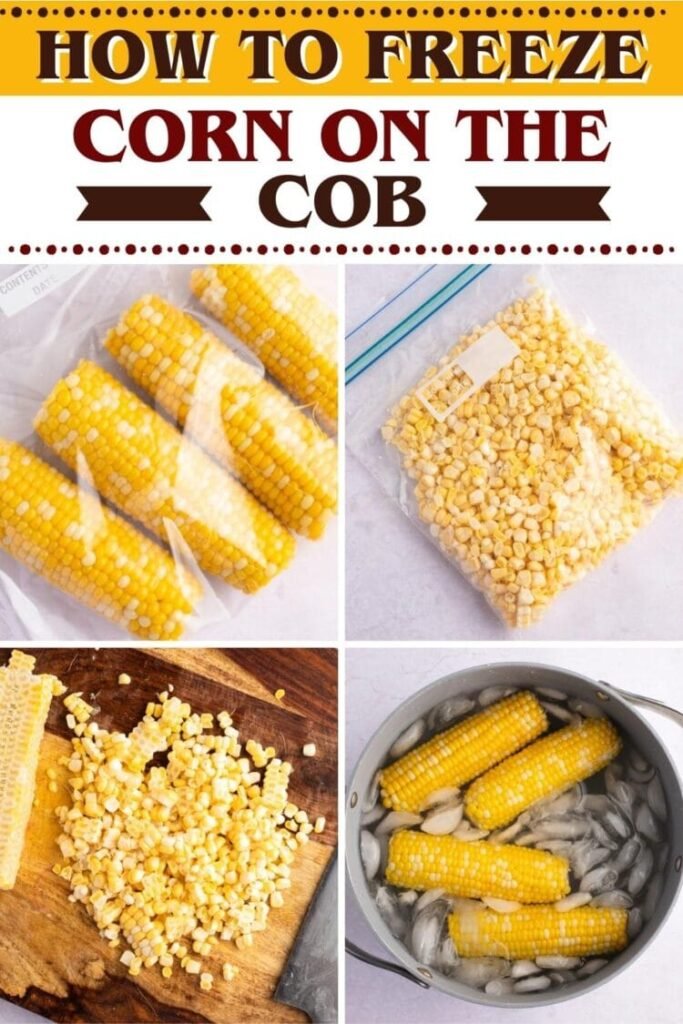
Step 1: Husk and Clean
Pull off the husks and silk from each ear. This part is tedious, I won’t pretend otherwise. A damp paper towel helps grab those last stubborn silk strands.
Step 2: Blanch the Corn
This is the step people skip. Don’t skip it.
Blanching stops the enzymes that break down flavor, color, and texture in the freezer. Skip it, and your corn will taste flat and mushy by February.
- Bring a large pot of water to a rolling boil. Salt it lightly if you’d like.
- Drop in the ears (in batches if needed, don’t overcrowd the pot).
- Boil for the right amount of time based on size:
| Corn Size | Blanching Time |
|---|---|
| Small ears | 7 minutes |
| Medium ears | 9 minutes |
| Large ears | 11 minutes |
Step 3: Ice Bath, Immediately
Pull the corn straight from boiling water into a bowl of ice water. Use tongs, it’s hot.
Leave it in the ice bath for the same amount of time you blanched it. This stops the cooking process cold (literally).
Step 4: Dry It Off
Pat each ear completely dry with a kitchen towel. This matters more than you’d think. Extra water on the cob turns into ice crystals in the freezer, and ice crystals mean freezer burn.
Step 5: Freeze Whole, or Cut the Kernels Off
Here’s where you’ve got two paths.
Freezing whole cobs:
Wrap each cob individually in plastic wrap or foil, then group them into a freezer bag. Push out as much air as possible before sealing.
Cutting kernels off:
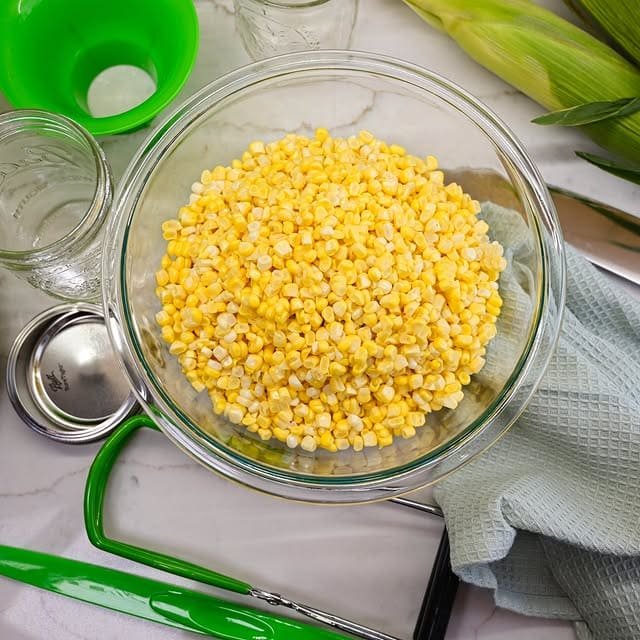
Stand the cob upright in the center of a bundt pan (the hole holds it steady) and slice down with a sharp knife. The kernels fall right into the pan instead of scattering across your counter. Spread the kernels on a baking sheet, freeze for an hour, then transfer to a bag. This “flash freeze” step keeps the kernels loose instead of turning into one giant corn block.
Step 6: Label and Freeze
Write the date on the bag. Frozen corn keeps its best quality for 8 to 12 months, though it stays safe to eat well beyond that.
Pro Tips
- Buy corn the same day you’re freezing it, if you can. The fresher it is going in, the better it tastes coming out.
- Don’t skip the flash freeze for kernels. It’s an extra 20 minutes, but it’s the difference between scooping out a handful later versus hacking at a solid brick with a spoon.
- Underboil rather than overboil. If you’re between two blanching times, go shorter. You can always cook it more later, you can’t undo mushy corn.
- Squeeze the air out of every bag. Air is the enemy here. A vacuum sealer is worth it if you freeze a lot of produce.
- Freeze in meal-sized portions. Nobody wants to defrost a 5-pound bag of corn for a single side dish.
Substitutions and Variations
- No fresh corn available? You technically can’t “freeze” already-frozen store corn again for best quality, so this method really is for fresh, in-season corn.
- Want it pre-seasoned? Toss cut kernels with a little butter and salt before the flash freeze for a shortcut side dish later.
- Short on freezer space? Cut kernels take up far less room than whole cobs. Worth considering if your freezer is already packed.
- Prefer roasted flavor? Grill or roast the corn first, let it cool, then cut and freeze. You’ll get a smoky flavor built right in.
Make Ahead Tips
Freezing corn is the make-ahead move here, but a few things help future-you:
- Portion it out before freezing, not after. Trying to break apart a frozen block later is a whole ordeal.
- Keep a running list on your freezer door of what’s in there and when it went in. It’s such a small habit that saves so much guessing later.
- If you’re prepping for a specific recipe (like a corn chowder or salad), pre-measure your bags to match the recipe’s serving size.
Nutrition and Extra Details
Nutrition (per 1 cup of corn kernels, cooked)
| Nutrient | Amount |
|---|---|
| Calories | ~132 |
| Protein | 5g |
| Carbs | 29g |
| Fiber | 3g |
| Fat | 2g |
| Vitamin C | 17% DV |
Values are approximate and will vary slightly by corn size and variety.
Diet Swaps
- Low sodium: Skip the salt in your blanching water entirely, it’s optional anyway.
- Whole30 or paleo: Corn is technically a grain, so it’s excluded from strict Whole30, but it fits most other whole-food diets fine.
Pairing Ideas
Frozen corn works beautifully in:
- Corn chowder
- Mexican street corn salad (esquites)
- Stir into fried rice
- Simple butter and herb side dish
Efficiency Tip
Blanch and freeze corn in one long session rather than a few ears at a time throughout the season. Set aside a Saturday afternoon, put on a podcast, and knock out your whole haul in one go.
Leftovers and Storage
Frozen corn on the cob keeps well for 8 to 12 months at peak quality in a standard freezer set to 0°F (-18°C).
To use it, there’s no need to thaw first for most recipes. Drop frozen cobs straight into boiling water, or toss frozen kernels right into a hot pan. Cooking from frozen actually helps prevent the corn from turning mushy.
If kernels have clumped together in the bag, give it a good shake before it fully hardens (within the first day or two of freezing). After that, it’s stuck.
FAQ
Do I have to blanch corn before freezing it?
Yes, if you want it to actually taste good months later. Skipping this step leads to corn that tastes stale and loses its bright color.
Can I freeze corn without cutting it off the cob?
Absolutely. Freezing whole cobs works great, it just takes up more freezer space and takes longer to blanch and cool than cut kernels.
Why is my frozen corn chewy or tough?
This usually means it was overcooked during blanching, or it sat in the freezer too long past the 8 to 12 month window.
Can I freeze raw corn without blanching?
You can, but it won’t taste as good. The texture and flavor degrade much faster without that blanching step.
How long does frozen corn last?
Best quality is 8 to 12 months, though it stays safe to eat for longer than that. It just won’t taste as fresh.
Can I refreeze corn once it’s thawed?
It’s best not to. Refreezing thawed corn affects both texture and food safety, so only thaw what you plan to use.
Wrapping Up
Thirty ears of corn taught me a lesson I didn’t know I needed: a little prep work now saves a lot of regret later.
Whether you’ve got a farmers market haul, a garden overflowing with corn, or just found a killer sale at the grocery store, freezing it properly means you get to enjoy that peak-summer sweetness whenever you want it.
Give this a try with your next batch of corn, and let me know in the comments how it turned out. Did you freeze it whole or cut the kernels off? I’d love to hear which way you went, and if you’ve got any questions before you get started, drop them below and I’ll help you out.