Can a jar of cucumbers and vinegar actually change your life? Mine did, kind of.
I used to think pickles were one of those things you just buy. Grab the jar, toss it in the cart, move on with your day.
Then my neighbor handed me a jar of her homemade dill pickles over the fence one summer, and I genuinely could not stop eating them straight out of the jar. 🥒
No canning pot. No sealing jars for hours. No sterilizing anything.
Just cucumbers, brine, and a fridge doing all the work.
That’s the whole trick behind refrigerator pickles, and once you try them, the store-bought jar starts tasting kind of sad in comparison.
Why This Works
Traditional pickling involves heat processing to make pickles shelf stable for months at room temperature.
Refrigerator pickles skip that step entirely. You’re not trying to preserve these for a year on a pantry shelf. You’re making a quick brine, pouring it over crunchy cucumbers, and letting the fridge do the rest.
The cold slows everything down just enough that the pickles stay crisp instead of turning soft and sad like some canned versions can.
Here’s the part that surprised me the most: the flavor actually gets better with time, and you can taste a real difference between day two and day five.
Give it a full 48 hours before you dig in, if you can wait that long.
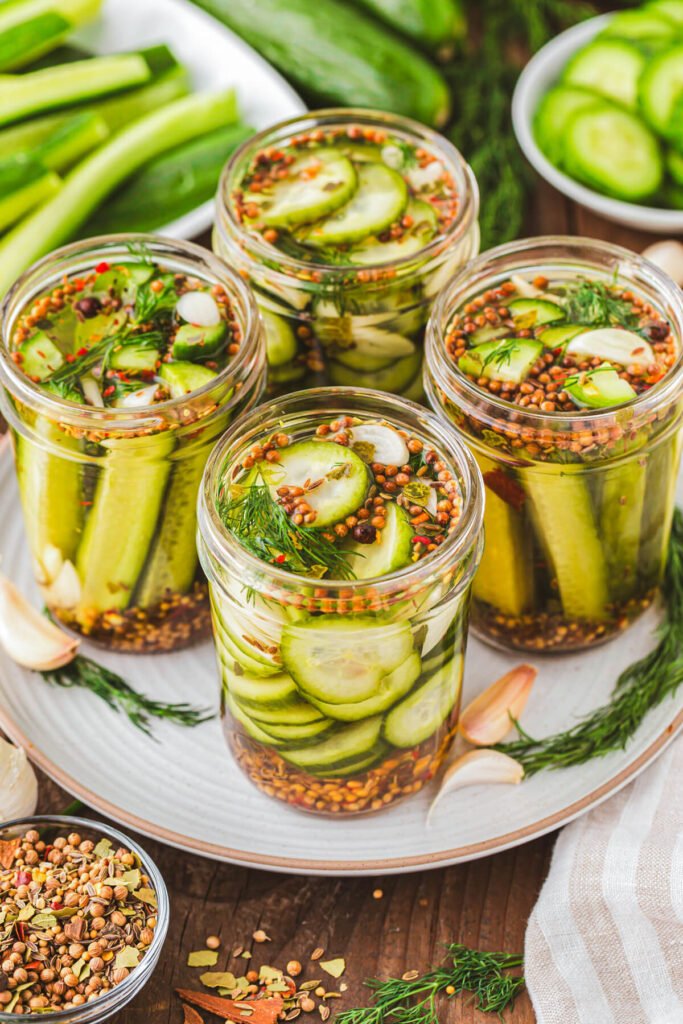
What You’ll Need
| Ingredient | Amount |
|---|---|
| Pickling cucumbers (Kirby or Persian) | 1.5 lbs |
| White vinegar | 1 cup |
| Water | 1 cup |
| Kosher salt | 2 tablespoons |
| Granulated sugar | 1 tablespoon |
| Fresh dill (heads or sprigs) | 4-5 sprigs |
| Garlic cloves, smashed | 4 |
| Black peppercorns | 1 teaspoon |
| Mustard seeds | 1 teaspoon |
| Red pepper flakes (optional) | 1/2 teaspoon |
A quick note on the cucumbers. Regular slicing cucumbers hold way too much water and turn mushy fast. Kirby cucumbers are the classic pickling choice for a reason, they’re small, firm, and built for this.
Tools You’ll Need
- A large glass jar or two mason jars with lids
- A small saucepan
- A cutting board and sharp knife
- Measuring cups and spoons
That’s genuinely it. No canning rack, no special equipment, no funnel required.
How to Make Refrigerator Dill Pickles
- Wash and trim your cucumbers. Slice off the very ends of each cucumber. This little step actually matters because the ends contain an enzyme that can make pickles go soft.
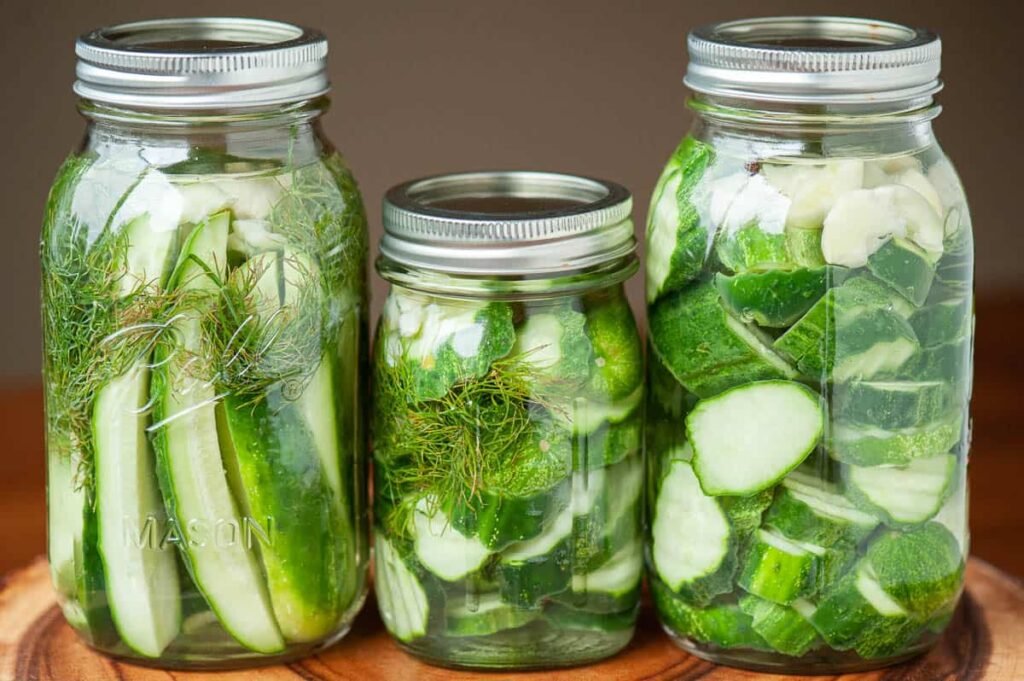
- Cut them however you like. Spears, rounds, or leave small ones whole. I usually go with spears because they fit perfectly in a pint jar.
- Make the brine. In a saucepan, combine the vinegar, water, salt, and sugar. Bring it to a gentle simmer, stirring until the salt and sugar fully dissolve. Then take it off the heat.
- Layer your jar. Add the garlic, dill, peppercorns, mustard seeds, and red pepper flakes to the bottom of your jar first.
- Pack in the cucumbers. Stand them up tight, packing as many in as you can fit without crushing them.
- Pour the brine over top. Make sure the cucumbers are fully submerged. If you’re short on liquid, top it off with a splash of plain water.
- Let it cool, then seal and chill. Let the jar cool to room temperature on the counter, then screw on the lid and slide it into the fridge.
- Wait, if you can. They’re technically edible after a few hours, but 48 hours is where the real flavor kicks in.
Pro Tips
- Use the freshest cucumbers you can find. Older cucumbers already have less crunch to lose, and pickling won’t bring it back.
- Don’t skip the trimmed ends. It’s one small cut that seriously affects the final texture.
- Pack the jar tight. Cucumbers floating around in extra space means more air pockets and less even pickling.
- Taste your brine before pouring. It should be sharp and a little too salty on its own. That’s normal, it mellows once it soaks into the cucumbers.
- Use glass, not plastic. Vinegar can hold onto plastic smells and flavors over time.
Substitutions and Variations
Want to switch things up? Here’s where you have room to play:
- Apple cider vinegar instead of white vinegar for a slightly fruitier, softer tang.
- Swap dill for sliced jalapeños if you want spicy pickles instead of classic dill.
- Add a few coriander seeds for a flavor that leans closer to a bread and butter style pickle (just add extra sugar too).
- Try zucchini or carrots using the exact same brine if you’re out of cucumbers.
- Skip the sugar entirely for a more traditional, purely tangy pickle.
Make Ahead Tips
These are basically made to be made ahead. Honestly, they need that fridge time to actually taste good.
Make a batch on a Sunday and you’ve got snacks and sandwich toppings covered all week. I’ll often double the recipe just so I’m not making another batch three days later.
Nutrition Breakdown
Here’s roughly what you’re looking at per serving (about 3-4 pickle spears):
| Nutrient | Amount |
|---|---|
| Calories | 15 |
| Carbohydrates | 3g |
| Sugar | 1g |
| Sodium | 420mg |
| Fiber | 1g |
| Fat | 0g |
Diet notes:
- Naturally vegan and gluten free as written.
- Watching sodium? Cut the salt down to 1 tablespoon, the pickles will still hold their crunch, just with a milder brine.
- Low sugar or keto friendly? Skip the sugar or swap in a sugar substitute that measures 1:1.
Pairing ideas: These are incredible next to a burger, chopped into potato salad, or just eaten straight from the jar at 10pm (no judgment here).
Time-saving tip: Make the brine while your cucumbers soak in an ice bath. It keeps them extra crisp and saves you a few minutes.
Leftovers and Storage
Keep your jar sealed in the fridge, and these will stay good for about 2 to 3 weeks.
The flavor keeps developing the longer they sit, so don’t be surprised if week two tastes even better than day three.
One thing to watch for: if the brine ever turns cloudy in a strange way or starts smelling off, toss the batch. That’s rare, but better safe than sorry.
FAQ
Do refrigerator pickles need to be canned or processed?
No. That’s the entire point of this method. The cold fridge temperature is what keeps them safe to eat, not heat processing.
Why are my pickles soft instead of crunchy?
This usually comes down to using the wrong cucumber variety, skipping the end trim, or letting the cucumbers get too warm before pickling. Kirby cucumbers, trimmed ends, and a quick chill all help.
Can I reuse the brine for a second batch?
You can, but the flavor will be noticeably weaker the second time around since a lot of the salt and acidity transferred into the first batch of cucumbers.
How long before I can actually eat them?
Technically a few hours in, but the real magic happens after 48 hours. A full week is even better if your patience allows for it.
Can I make these without sugar?
Yes, plenty of dill pickle recipes skip sugar entirely. It just adds a slight balance to the tang, so leaving it out gives you a sharper, more traditional pickle.
Wrapping Up
That’s really all there is to it. A jar, some cucumbers, a simple brine, and a little bit of patience while your fridge does the actual work.
Once you’ve made a batch, going back to the store-bought jar is going to feel like a downgrade.
Give this one a try this week and let me know how it turns out in the comments below. Did you tweak the spice level? Try a different vegetable? I’d genuinely love to hear how your batch came out. 🥒