I used to order salmon bowls from a place near my old apartment at least twice a week.
Then I did the math on how much I’d spent there in a single month and nearly choked on my green tea.
So I started making them at home. And after a solid dozen tries, I landed on a version that’s honestly better than the takeout one ever was.
This is that recipe.
It’s sticky, garlicky, a little sweet, and comes together in about 25 minutes. No fancy equipment. No hard-to-find ingredients. Just really, really good salmon over rice.
Side Note: If you’re a fan of easy weeknight bowls, you’ll probably also love my Korean ground beef bowl recipe. Same energy, different protein.
Why This Recipe Works
The sauce is the whole show here. Honey and garlic caramelize together in the pan, creating this glossy, sticky coating that clings to every bite of salmon.
A splash of soy sauce keeps it from turning into candy. Rice vinegar cuts through the sweetness so it doesn’t feel one-note.
And because the salmon cooks in the same pan as the sauce, you get maximum flavor with minimum dishes. That’s a win in my book every single time.
There’s also something satisfying about watching a thin, runny sauce turn into this thick, glossy glaze in under two minutes. It feels a lot more impressive than the effort it actually takes.
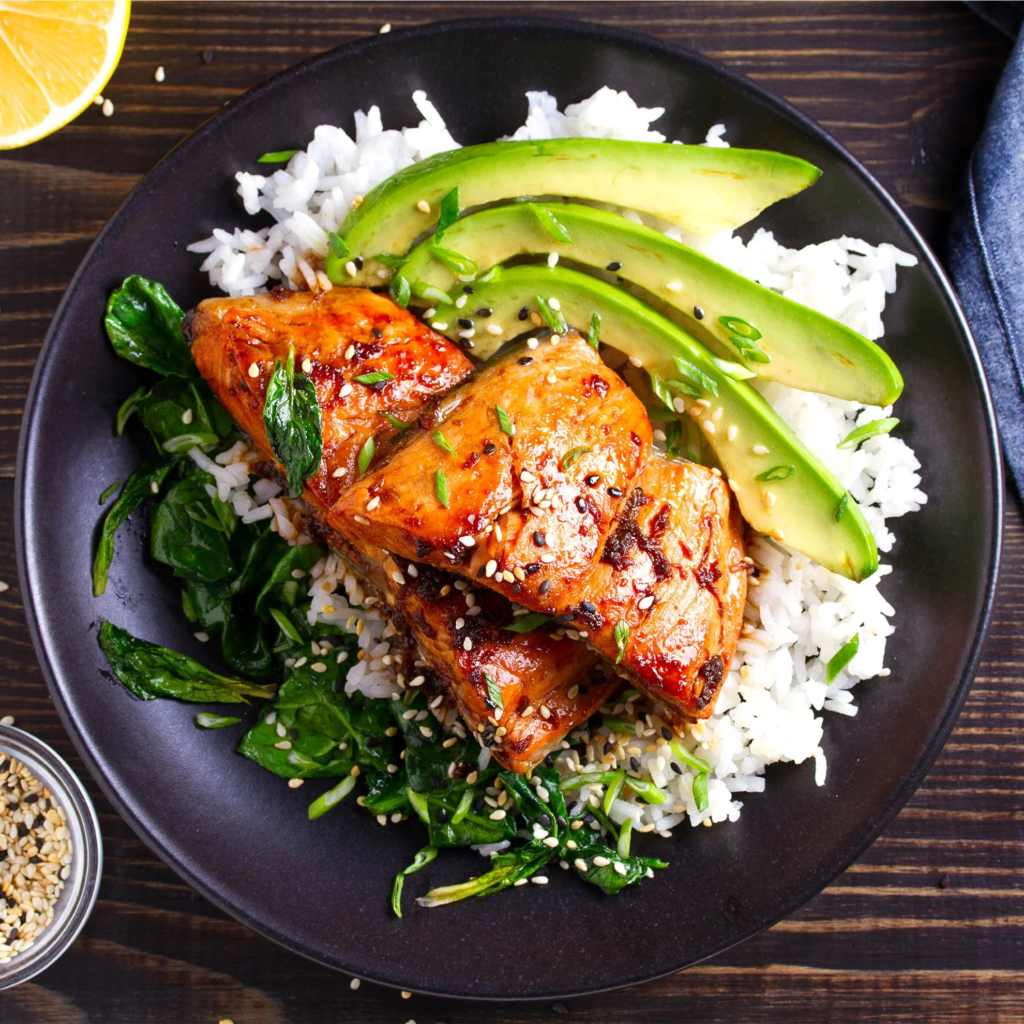
How to Pick Good Salmon
This recipe only has a handful of ingredients, so the quality of your salmon really shows.
Look for fillets that are firm to the touch and have a bright, even color, whether that’s deep pink or orange depending on the variety. Avoid anything with a dull, grayish tint or a strong fishy smell.
Side Note: Wild-caught salmon tends to be leaner and slightly more expensive, while farm-raised is fattier and more forgiving if you accidentally overcook it a bit. Either works great here.
If you can, buy your salmon the same day you plan to cook it. Fresh fish makes a noticeable difference in a recipe this simple.
What You’ll Need
| Ingredient | Amount |
|---|---|
| Salmon fillets, skin removed | 4 (about 6 oz each) |
| Honey | 1/3 cup |
| Soy sauce | 1/4 cup |
| Garlic, minced | 4 cloves |
| Rice vinegar | 1 tablespoon |
| Fresh ginger, grated | 1 teaspoon |
| Cornstarch | 1 teaspoon |
| Water | 1 tablespoon |
| Olive oil | 1 tablespoon |
| Cooked white or brown rice | 4 cups |
| Green onions, sliced | For garnish |
| Sesame seeds | For garnish |
| Salt and pepper | To taste |
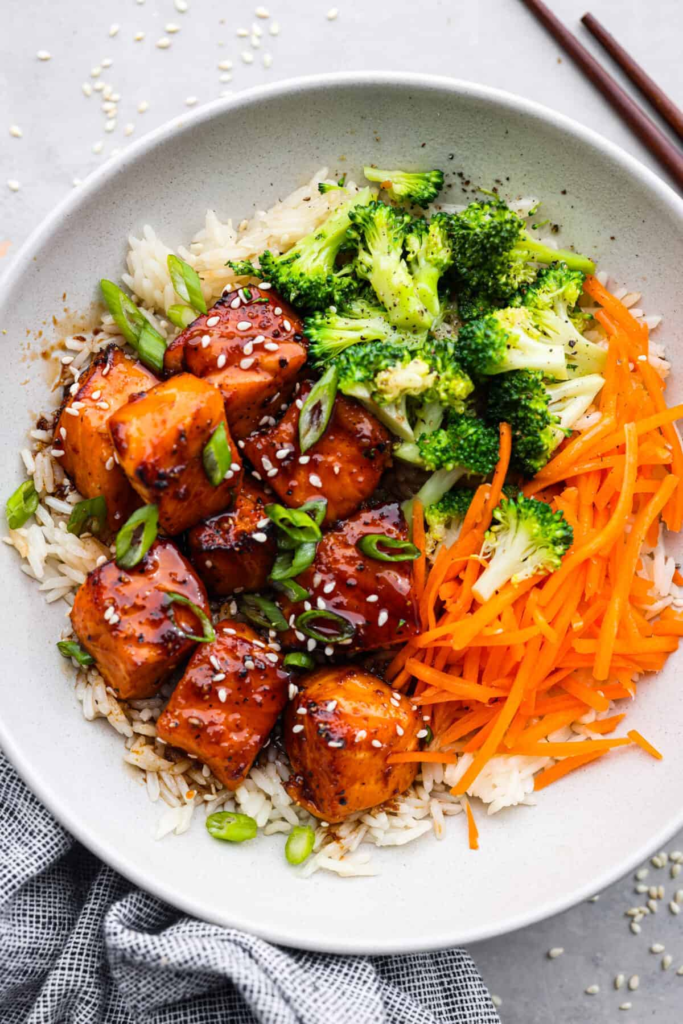
Optional bowl add-ins: shredded carrots, cucumber ribbons, edamame, avocado slices, shelled edamame, or steamed broccoli.
Tools You’ll Need
- Large nonstick skillet
- Small mixing bowl
- Whisk or fork
- Measuring cups and spoons
- Sharp knife and cutting board
- Rice cooker or pot (if making rice fresh)
How to Make Honey Garlic Salmon Bowls
- Pat the salmon dry. Season both sides with salt and pepper. This step matters more than you’d think, since a dry surface is what gets you that golden sear instead of a steamed, pale one.
- Whisk your sauce. In a small bowl, combine the honey, soy sauce, minced garlic, rice vinegar, and grated ginger. Set it aside.
- Sear the salmon. Heat the olive oil in a large skillet over medium-high heat. Add the salmon fillets and cook for 3-4 minutes per side, until they’re golden on the outside and just barely opaque in the center.
- Remove and rest. Transfer the salmon to a plate. It’ll keep cooking a little from residual heat, so don’t panic if it looks slightly underdone.
- Build the sauce in the pan. Pour the honey garlic mixture into the same skillet. Bring it to a simmer, scraping up any browned bits from the salmon (that’s flavor, don’t waste it).
- Thicken it up. Mix the cornstarch with the water in a small bowl until smooth, then whisk it into the simmering sauce. Cook for 1-2 minutes, until it’s glossy and coats the back of a spoon.
- Return the salmon to the pan. Spoon the sauce over each fillet, flipping once to coat both sides.
- Assemble your bowls. Add rice to each bowl, top with a salmon fillet, and spoon extra sauce over everything. Add your veggies of choice.
- Garnish and serve. Sprinkle with green onions and sesame seeds. Serve immediately while it’s still warm and sticky.
Pro Tips
- Don’t walk away during the sauce step. Honey burns fast once it starts to simmer, so stay close and keep whisking.
- Buy salmon that’s the same thickness across all fillets. Uneven pieces mean some will overcook while others are still raw in the middle.
- Save the skin for something else. If your salmon comes with skin on, crisp it up separately in a hot pan for a crunchy snack while you cook. Don’t waste it.
- Double the sauce if you’re a sauce person. I always make 1.5x because I like extra to drizzle over the rice.
- Let the pan get properly hot before adding the fish. A cold pan is the number one reason salmon sticks and falls apart when you try to flip it.
Substitutions and Variations
- No salmon on hand? This sauce works beautifully on chicken thighs, shrimp, or even tofu. Just adjust the cook time.
- Swap the honey for maple syrup if you want a slightly deeper, less floral sweetness.
- Gluten-free? Use tamari instead of regular soy sauce.
- Want heat? Add a teaspoon of sriracha or a pinch of red pepper flakes to the sauce.
- Low-carb version: Swap the rice for cauliflower rice or a bed of greens.
Make Ahead Tips
You can mix the sauce up to 3 days ahead and keep it in the fridge in an airtight container. Just give it a good whisk before using it since the ingredients tend to separate a bit.
The rice can also be cooked ahead and reheated when you’re ready to build your bowls. This turns the whole recipe into a genuine 15-minute meal on a busy night.
Nutrition Breakdown (Per Bowl, Approximate)
| Nutrient | Amount |
|---|---|
| Calories | 520 |
| Protein | 34g |
| Carbohydrates | 58g |
| Fat | 16g |
| Sugar | 22g |
| Sodium | 680mg |
Please note: these numbers are estimates and will shift depending on your exact ingredients and brands. Always double check if you’re tracking macros closely.
Diet swaps:
- For lower sugar, cut the honey to 1/4 cup and add a splash more soy sauce.
- For higher protein, add an extra egg on top or a scoop of edamame.
Pairing ideas: A cold cucumber salad, miso soup, or a simple side of steamed bok choy all work great alongside this bowl.
Time-saving tip: Use a bag of pre-cooked microwave rice if you’re really in a rush. Nobody will know.
Leftovers and Storage
Store leftover salmon and rice separately in airtight containers in the fridge for up to 3 days.
Reheat gently in the microwave in 30-second bursts, or in a skillet over low heat with a splash of water to loosen the sauce back up.
I don’t recommend freezing this one. The sauce texture changes once it’s been frozen and thawed, and it’s just not the same.
FAQ
Can I use frozen salmon?
Yes, just thaw it completely and pat it very dry before searing. Excess moisture will keep it from browning properly.
What kind of salmon works best?
Any fillet works, but I lean toward center-cut pieces since they cook more evenly.
Is this recipe spicy?
Not as written, but it’s easy to add heat with sriracha or chili flakes if that’s your thing.
Can I grill the salmon instead of pan-searing it?
Absolutely. Grill the salmon plain, then brush it with the reduced sauce right before serving.
How do I know when the salmon is done?
It should flake easily with a fork and reach an internal temperature of 145°F.
Can I meal prep this for the week?
Yes, though I’d recommend storing the sauce separately from the rice and salmon, then reheating everything together right before eating. This keeps the texture much closer to fresh.
My sauce turned out too thin. What happened?
It probably didn’t simmer long enough after you added the cornstarch slurry. Give it another minute or two over medium heat, whisking constantly, and it’ll thicken right up.
Can I double this recipe for a crowd?
Definitely. Just cook the salmon in batches so you don’t overcrowd the pan, then make one larger batch of sauce to pour over everything at the end.
Wrapping Up
This is one of those recipes that quietly became a permanent fixture in my weekly rotation, and I have a feeling it’ll do the same for you.
Give it a try this week and let me know how it turns out in the comments below. I’d love to hear what veggies you added to your bowl, or if you tried it with a different protein.
And if you have any questions along the way, drop them below too. I read every single comment.